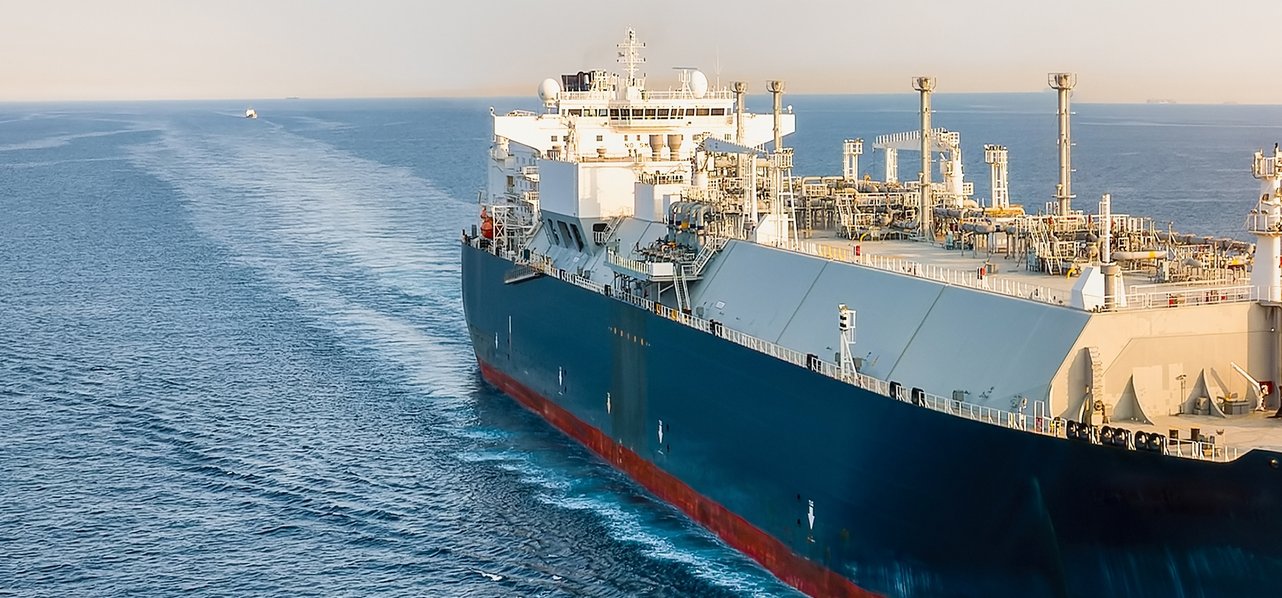
2025 has been defined by sweeping changes across the maritime sector, from evolving regulatory frameworks, trade policies and compliance obligations to innovative financing structures and sustainability initiatives. Our most popular articles from 2025 highlight how this year has been one of both challenge and opportunity, underscoring the importance of practical guidance in navigating an increasingly complex maritime landscape.
This round-up includes links to our most popular maritime articles of 2025 for you to explore in more detail. As we move into 2026, we’re excited about the developments on the horizon and the opportunities they will bring for the maritime industry.
On the US Trade Representative’s Port Fees on Chinese Shipping
This article discusses a February 2025 proposal by the U.S. Trade Representative to impose wide-ranging port fees on vessels with a Chinese nexus. The proposed fees targeted Chinese operators, Chinese-built vessels and fleets, and orders from Chinese shipyards.
This subsequent article describes the U.S. Trade Representative’s finalised port fee action targeting Chinese-linked shipping, which was set to begin on 14 October 2025. Pursuant to the action, fees are generally imposed on Chinese owned- and operated-vessels and Chinese-built vessels, with special rules for LNG carriers and vehicle transporters. Since this article was published, the port fees have been amended and suspended for one year following a trade summit between President Trump and President Xi.
The article explains that the U.S. Trade Representative launched a Section 301 investigation into China’s maritime practices after complaints from U.S. labour unions, leading to new port fees on Chinese-linked vessels. In response, China introduced retaliatory measures against U.S.-related shipping, escalating trade tensions between the two countries. Again, since this article was published, the port fees have been amended and suspended for one year – see article on this below.
The article describes amendments to the U.S. port fees and explains that after the U.S. and China introduced new port fees on shipping in October 2025, both the U.S. and China agreed at a November summit to suspend their respective fee regimes for one year starting 10 November 2025, ending 9 November 2026. This temporary pause eases immediate trade tensions but leaves the regulatory frameworks in place for possible reinstatement when the suspension ends.
On the Evolution of Finance and Leasing Structures in Maritime
5. Ship leasing: Does a financial lessor need to be the registered owner of the leased asset?
Our experts share insights on this evolving topic this article. Ship leasing was historically considered an “alternative” ship financing structure with a relatively covenant free financing instrument providing high financing leverage compared to what was provided in traditional debt financing. However, ship leasing is now considered to be mainstream. That said, financing products are continuously evolving. Whilst a salient feature of ship leasing was that ownership vested in the lessor, this article explores how that no longer needs to be the case.
Following the above article, we wrote a piece which compares the Conditional Sale – Lease in/Lease Out structure with the Islamic Ijara leasing model which is governed by Sharia principles. We are seeing Islamic finance structures increasingly being adopted beyond purely Sharia compliant mandates, offering flexible, risk-conscious solutions that appeal to a wider range of market participants. As the maritime finance landscape continues to diversify, we anticipate further innovation in structuring tools that balance operational control, enforceability and ownership risk in both conventional and Islamic frameworks.
7. Asian leasing models are reshaping maritime funding – opportunities for Germany
The article explores how Asian ship leasing models, particularly from China and Japan, are reshaping maritime financing opportunities in Germany. It explains that Asian lessors, with their strong capital bases and flexible structures, are increasingly stepping into roles traditionally dominated by European banks. For German shipping companies, this shift opens new funding avenues, especially as domestic lenders remain cautious.
On EU Maritime Regulations, the Energy Transition and Sustainable Finance in Shipping
8. No Maritime EU ETS Account? No Compliance Register or Risk Penalties
The article highlights the importance of shipping companies opening a Maritime EU ETS account to comply with the European Union’s Emissions Trading System. Without such an account, operators cannot access the compliance register, leaving them unable to surrender allowances and at risk of significant penalties. It stresses that early preparation is essential, as delays in setting up accounts could create administrative bottlenecks and expose companies to enforcement action.
The article introduces the LMA’s Green Loan Rider, a new contractual framework designed to reflect the Green Loan Principles that LMA introduced a couple of years ago. The article explains the key components of the rider and how it can be incorporated in green loan agreements, i.e. where the proceeds of the loan are used to incorporate environmental performance targets, such as emissions reductions or efficiency improvements.
10. Offshore Sync Shipping – New Business Opportunities on the Horizon
The article explores how the rapid expansion of offshore wind energy in Europe, particularly Germany, is creating significant new opportunities for the maritime industry. It highlights the scale of upcoming projects, the need for collaboration across energy, infrastructure, and transport sectors, and the potential for shipyards, logistics providers and financiers to benefit from this transformation.
11. Are You FuelEU Ready or Just Coasting?
The article explains the new FuelEU Maritime Regulation, which came into force on 1 January 2025 to reduce greenhouse gas intensity in shipping at EU and EEA ports. It highlights that some operators are already preparing detailed compliance strategies, while others are delaying action until 2026, even basic understanding of the regulation and the risks until 2026 thus leaving themselves exposed legally and commercially on several levels. This article stresses the importance of being proactive rather than reactive and explains the importance of putting in place a clear compliance strategy now which mitigates any impacts of the first verification period. Stay tuned for an update on FuelEU later this month.
On Landmark Court Decisions
12. Who gets the upside? – Court of Appeal reverses the Lila Lisbon judgment
This article explores the UK Court of Appeal’s (CA) decision to reverse the first instance judgment in The Lila Lisbon case, reshaping how “loss of bargain” damages are treated under the Saleform 2012 MOA. The CA found that buyers may claim market-based damages for seller delays – even without a repudiatory breach – where proven negligence is shown. The article explores what this means for ship sale contracts, why the CA’s interpretation of Clause 14B matters and practical implications for buyers and sellers navigating delivery delays. NB Since this article was published, the UK Supreme Court has given the sellers permission to appeal, so there remains a possibility of the CA’s judgment being overturned on appeal. If this case does come before the Supreme Court, we shall update our article, but for the time being, it explores the law as it currently stands.
This article examines a landmark UK Supreme Court on the legal implications of a buyer’s failure to provide KYC documentation ‘without delay’ to the MOA ‘Deposit Holder’ or escrow agent. The judgment confirms that a seller’s right to cancel the MOA and to claim to an MOA deposit only arises once the escrow agent confirms the account opening – rejecting the seller’s argument that it was entitled to cancel earlier under the principle of ‘deemed fulfilment’ of a condition precedent (namely provision of the KYC material) whose fulfilment the buyer’s breach prevented and overturning the Court of Appeal’s ruling. This brings clarity for the shipping industry and underscores the need for careful drafting to address KYC-related delays.
You’ll also find a wide range of articles on maritime hot topics and the latest industry developments on our website – feel free to click here to discover more insights. Please get in touch with your usual contact at WFW if you have any questions on any of the topics.