
Partner Athens
"Greece is positioned amongst natural European gateways through the ports of Piraeus, Thessaloniki and Elefsina, as well as the rapidly expanding digital infrastructure of Attica and Crete."
Greece’s infrastructure story cannot be read in isolation from its geography. Greece is positioned amongst natural European gateways through the ports of Piraeus, Thessaloniki and Elefsina, as well as the rapidly expanding digital infrastructure of Attica and Crete. It sits at the crossroads of three continents at a time when the corridors connecting them are being redrawn. The India–Middle East–Europe Economic Corridor (“IMEC”), announced at the G20 summit in New Delhi in September 2023, envisages an integrated shipping, rail, energy and data channel linking South Asia, the Gulf and Europe.
Although IMEC’s implementation timetable remains subject to regional political conditions, its digital pillar, namely submarine cables and cross-border data infrastructure, is widely considered the element most capable of advancing in the near term. In parallel, the Eastern Mediterranean corridor linking Israel, Cyprus and Greece continues to mature across electricity interconnection, hydrogen-ready networks and submarine data systems. Recent disruption to the region’s traditional maritime chokepoints has only raised the strategic premium on diversified routes to Europe and on the jurisdictions able to host them.
Whatever pace these corridors ultimately develop, the broader trajectory points towards increasing flows of energy, data and capital towards and through Greece.
Energy Storage
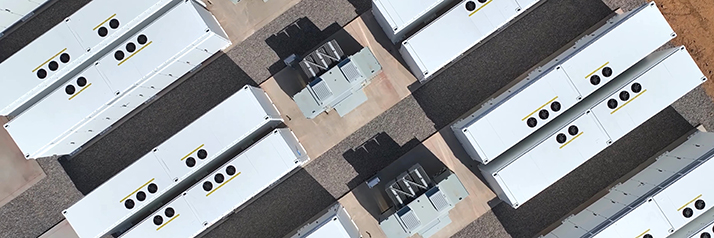
Energy storage is the current driving force in Greece’s energy transition.
Battery Energy Storage Systems (“BESS”) are not just energy assets; they are infrastructure assets, offering flexibility to the electricity system. BESS adoption in Greece has been strong in recent years, with Law 4951/2022 introducing the concept of BESS to the Greek electricity market. Further legislation expanded the scope to allow BESS to be co-located with renewable energy projects. It also allowed BESS to be added to existing photovoltaic stations and permitted conventional power units that are nearing end of life to be transformed into electricity storage units.
The Greek government promoted BESS adoption holding three auctions in 2023 and 2024. These provided investment and operating aid to BESS projects, including capital expenditure subsidies. A total capacity of around 900 MW was awarded through the BESS Auctions and all selected projects are expected to be ready for electrification by mid-December 2026.
Additionally, in March 2025, the Ministry of Environment and Energy announced a priority scheme for BESS projects to be awarded grid connection offers (the “BESS Acceleration Scheme”). Qualifying projects would not receive investment or operating aid, being intended to operate on a purely merchant basis. In total, the BESS Acceleration Scheme will award 4.7 GW of capacity: 3.8 GW in the HV system and 0.9 GW in the MV network. There were over 800 applications for the scheme, with a total capacity of over 9 GW, reflecting the vast market interest in BESS projects. The BESS Acceleration Scheme priority lists were announced on 13 November 2026 and the transmission system and distribution network operators are expected to begin awarding grid connection offers in the following months.
Additional capacity will be prioritised for co-located BESS and pumped hydro energy storage which, although not used extensively, has significant potential. Pumped hydro energy projects include:
- Terna Energy’s Amphilochia project (680 MW installed capacity), currently under construction;
- Amari Hybrid Project (150 MW capacity including a wind farm) under development in Crete; and
- Enercoplan’s project in Arcadia with a planned installed capacity of 3,900 MW.
Delays to the implementation of a consistent regulatory framework and the prioritised awarding of grid capacity have led to only a small number of BESS achieving operational status. Energy storage projects are, however, a necessary countermeasure to heavy curtailments for renewables and are expected to dominate the Greek energy market until sufficient capacity is available.

E-mobility
E-mobility investment is shifting from vehicle adoption to charging infrastructure.
Greece’s e-mobility market has entered a new phase of development, with investments increasingly focussed on charging infrastructure rather than vehicle adoption alone. Whilst electric vehicle adoption remains comparatively limited, the expansion of publicly accessible charging networks, particularly fast and high-power charging along key transport corridors and outside principal metropolitan areas, is creating opportunities for utilities, infrastructure investors and specialist operators.
The market is increasingly consolidating around a small number of established energy groups. This includes PPC, through which PPC Blue has emerged as the largest charging network operator in Greece; Motor Oil through its incharge; and HELLENiQ Energy.
From a regulatory perspective, Law 4710/2020 established the foundations of the Greek e-mobility framework, governing charging infrastructure operators and service providers, as well as introducing development and operation rules for charging networks. The implementation of the EU Alternative Fuels Infrastructure Regulation (“AFIR”) has become a key driver of investment. AFIR requires expanded charging coverage and greater deployment of high-power charging infrastructure across the Trans-European Transport Network (“TEN-T”), effectively transforming charging infrastructure deployment from a policy objective into a regulatory obligation.
At the same time, Greece’s National Climate Law (Law 4936/2022) is expected to support future demand by introducing progressively stricter electrification requirements, including obligations relating to zero-emission taxi and fleet vehicles. Combined with continuing subsidy schemes for electric vehicles and charging infrastructure, these measures are expected to accelerate market growth over the coming years.
The principal investment opportunity lies in fast and ultra-fast charging infrastructure. Key project risks include grid connection constraints, permitting timelines and seasonal demand pressures in tourism-dependent regions. However, the market remains relatively underpenetrated and offers significant opportunities for utilities, infrastructure funds, transport operators and specialist charging providers. The interaction between charging infrastructure, electricity networks and renewable energy generation is also expected to become increasingly important as Greece advances its broader decarbonisation objectives.
Data centres
Grid capacity shapes the next phase of data centre investment.
Greece is developing into an important data centre market in Southeastern Europe, supported by its geographical position, expanding submarine cable connectivity and growing renewable energy capacity. Investment by international operators and infrastructure investors is moving the sector beyond its early development phase, although access to electricity-grid capacity increasingly determines where and at what pace new projects can proceed.
Key contacts

Senior Associate Athens

Counsel Athens

Senior Associate Athens

Associate Athens

Associate Athens

Associate Athens

Associate Athens

Associate Athens
"Greece is developing into an important data centre market in Southeastern Europe, supported by its geographical position, expanding submarine cable connectivity and growing renewable energy capacity."
Law 5069/2023 established a distinct legal framework for the construction and operation of data centres, including specific land-use and building requirements. Projects are subject to operation notification under Law 4442/2016, with applicable procedures, documentation and penalties further specified by secondary legislation adopted in December 2024.
Environmental licencing is governed by Law 4014/2011 and depends on installed electricity capacity. Larger facilities require an Environmental Terms Approval following an environmental impact assessment, whilst qualifying lower-capacity facilities are subject to Standard Environmental Commitments. A ministerial decision adopted in July 2025 completed the procedural framework for the latter category.
Attica remains the principal data centre cluster, but limited connection capacity is strengthening the case for regional development, particularly in areas with available grid infrastructure, suitable industrial land and access to renewable generation. Proposed developments in Western Macedonia illustrate the potential to repurpose former lignite regions for power-intensive digital infrastructure.
Grid availability has been the sector’s principal constraint. As of September 2026, rising investment interest and lack of specific rules for connection to the grid, has led to a backlog of more than 9 GW of data centre applications to connect to the electricity system, creating delays and uncertainty to even the more mature projects. The Ministry of Environment and Energy responded to the challenge by publishing a new law in November 2026, attempting to address many of the issues. Law 5356/2026 establishes a data centre registry and grants absolute connection priority, subject to certain conditions, to data centres with a maximum power consumption exceeding 200 MW. It also sets certain requirements for data centre projects applying for grid connection, including providing:
- a letter of guarantee in the amount of €200,000 per MW of maximum power consumption;
- a complete Environmental Impact Study or a declaration that the project is subject to Standard Environmental Commitments;
- proof that the project’s land has been secured for at least ten years;
- for projects over 10 MW, proof of the applicant’s financial capability;
- a pre-approval of a building permit; and
- a project implementation timetable.
Law 5356/2026 also imposes obligations to data centre projects to procure at least 60% of their annual electricity consumption from new renewable energy and electricity storage projects. This can be done in the form of a direct line between the data centre and the renewable/storage project or through a PPA, either virtual, or with physical delivery. They are also obliged to pay an annual special duty of €20,000 per MW of maximum power consumption in support of local communities.
The new law provisions on data centres highlight the importance of grid connection visibility to capital-intensive investments and attempt to set the regulatory grounds over the issue. However, secondary legislation is still required to prioritise existing data centre connection applications.
The regulatory perimeter is also expanding. Investments by third-country investors may require prior clearance under Greece’s foreign direct investment screening regime, particularly where they concern digital infrastructure or other sensitive sectors. Data centre and cloud service providers may fall within the cybersecurity obligations introduced by Law 5160/2024, which transposed the NIS2 Directive, whilst GDPR and Greek data-protection legislation remain applicable according to the operator’s role in processing personal data. EU energy-efficiency legislation also introduces reporting obligations concerning the energy and sustainability performance of qualifying facilities.
Investors must assess not only the existence of nominal connection capacity but also the timing and cost of any required transmission system or distribution network works, competing connection requests and the extent to which committed grid upgrades can support the project’s future expansion. Projects concentrated in Attica may face longer connection timelines or greater expenditure than developments in regions with stronger available capacity.
Greece offers a credible platform for further data centre investment. The next phase of growth is likely to be shaped more by the availability of power and grid infrastructure than the availability of projects.

Fibre Networks
Domestic expansion and international connectivity
Greece’s digital connectivity market is developing along two related tracks. Domestically, public and private investment is accelerating the deployment of fibre infrastructure. Internationally, Greece’s geographical position, submarine cable landing capacity and expanding data centre market strengthen its potential role as a gateway from data traffic between Europe, the Middle East and Asia.
Law 4727/2020, which transposed the European Electronic Communications Code, provides the principal framework governing electronic communications, including authorisations, access, spectrum and end-user protection. Regulatory oversight rests principally with the Ministry of Digital Governance and the Hellenic Telecommunications and Post Commission. The framework is supplemented by Regulation (EU) 2024/1309, the Gigabit Infrastructure Act, which has applied principally since November 2025 and is intended to facilitate network deployment through access to existing physical infrastructure, coordination of civil works, streamlined permitting and fibre-readiness requirements for buildings. Its effectiveness in Greece will depend substantially on domestic implementation and consistent application by the competent authorities.
Public investment is centred on the Ultra-Fast Broadband project, a state aid-supported public-private partnership designed to extend gigabit-capable, open-access wholesale infrastructure to areas outside commercial deployment plans. The project reached contract signature in December 2025 and represents a significant step towards addressing regional disparities in fixed connectivity. Demand-side measures, including voucher and building-readiness schemes, continue to support network adoption and in-building deployment.
Greece is also attracting investment in submarine cable systems, landing stations and terrestrial backhaul, supported by its proximity to emerging data centre clusters in Attica and Crete. Disruption affecting established Europe-Asia routes has reinforced the strategic importance of diversified digital corridors through the Eastern Mediterranean. Relevant investments are subject not only to electronic communications and maritime requirements, but also to an expanding security framework, including the NIS2 regime, critical-entity resilience requirements and Greece’s foreign direct investment screening legislation. Security, ownership and resilience considerations should therefore be addressed at the outset of cable and landing station transactions.
The principal domestic constraints remain rights of way, excavation and municipal approvals, grid and site requirements for associated facilities, shortages of specialised labour and the cost of deployment across mountainous and island regions. Fibre availability also continues to exceed customer take-up, requiring conservative assumptions as to adoption and revenue growth.

Hydrogen
The hydrogen framework is established but bankability remains untested.
Greece has taken an important step towards establishing a domestic hydrogen market through Law 5215/2025, its first dedicated legislative framework for renewable and low-carbon hydrogen. The law regulates hydrogen production, certification and geographically confined hydrogen networks, and introduces the Hydrogen Producer Certificate as the first stage of the licensing process. Projects remain subject to environmental, installation, operational and, where relevant, network-connection requirements.
The domestic regime forms part of the wider EU framework. Directive (EU) 2023/2413, commonly known as RED III, supports demand for renewable fuels of non-biological origin in industry and transport, whilst the applicable delegated regulations prescribe the conditions under which hydrogen qualifies as renewable. The EU Hydrogen and Decarbonised Gas Markets Package establishes the developing framework for hydrogen networks, third-party access and market regulation. Law 5215/2025 partially transposes Directive (EU) 2024/1788 but further secondary legislation and regulatory implementation will be required.
The initial Greek project pipeline is concentrated around established industrial demand. Motor Oil is developing the EPHYRA project at its Corinth refinery and the related TRIERES Hydrogen Valley initiative. Hellenic Hydrogen, a joint venture between Moror Oil and PPC, is pursuing an electrolyser project in Western Macedonia. These projects illustrate the likely first phase of the market, in which production is located close to credible industrial users and supported, where available, by EU or national funding. Commercial-scale renewable hydrogen production nevertheless remains at an early stage.
Bankability will depend principally on long-term offtake, access to competitively-priced renewable electricity, compliance with EU renewable-hydrogen criteria and the availability of transport or storage infrastructure. In the absence of a mature dedicated hydrogen network, early projects are likely to rely on on-site consumption, nearby industrial users or geographically confined networks. Public support may remain necessary to address the cost differential between renewable hydrogen and conventional alternatives, particularly until regulatory demand and the market for hydrogen-derived products develop further.
For hydrogen investors and lenders, the principal risks are therefore no longer the absence of a legislative framework, rather its implementation and the allocation of certification, electricity-supply, infrastructure and offtake risk. Although Greece has created a route to market, it has not yet demonstrated that projects following that route are financeable at scale.

Carbon Capture Storage
A new framework for carbon-management infrastructure.
"Carbon capture and storage is emerging as a significant area of infrastructure development in Greece, particularly for hard-to-abate sectors such as cement, refining and chemicals."
Carbon capture and storage (“CCS”) is emerging as a significant area of infrastructure development in Greece, particularly for hard-to-abate sectors such as cement, refining and chemicals. As industrial decarbonisation moves higher on both the national and European policy agenda, interest is growing in the development of carbon-management infrastructure capable of serving not only domestic emitters but potentially the wider Southeastern European region. Greece’s prospective geological storage capacity and its location in the Eastern Mediterranean may also support the development of cross-border carbon-management infrastructure serving Southeastern Europe.
The most advanced project currently under development in Greece is the Prinos CCS project. It proposes the permanent storage of CO2 in depleted offshore hydrocarbon reservoirs in Northern Greece. Other initiatives, including the IRIS project, envisage the capture and transportation infrastructure required to connect industrial emitters with storage capacity. However, the development of a regional storage hub will depend on coordinated investment across the CCS value chain and workable arrangements for the cross-border transportation and acceptance of CO2.
Law 5261/2025 established Greece’s first comprehensive framework for the capture, use, transportation and geological storage of CO2 implementing Directive 2009/31/EC. It introduces separate licensing regimes for relevant activities, designates the competent authority and treats CO2 transportation and storage infrastructure as activities of public utility. The domestic framework operates alongside EU legislation, including the Net-Zero Industry Act which establishes an EU-level objective for annual CO2 injection capacity.
The investment case will depend on the availability of bankable capture projects, transportation infrastructure, long-term storage arrangements and an appropriate allocation of leakage, monitoring and post-closure liability. Project economics are also likely to remain sensitive to carbon prices, public support and the allocation of volume risk between emitters, transport operators and storage providers. Greece now has a dedicated legal framework but the emergence of a viable CCS market will depend on its practical implementation and the coordinated development of the entire value chain.

Public procurement
Accelerating the delivery of infrastructure projects.
Public procurement remains a principal means of delivering Greece’s infrastructure programme, supported by the Recovery and Resilience Facility, European structural funds and the Public Investment Programme. Public authorities continue to procure projects across the transport, energy, water, digital and social infrastructure sectors.
The legal framework is governed principally by Law 4412/2016, as amended, which transposed the EU public procurement directives into Greek law. Successive reforms have sought to streamline tender procedures, strengthen contract management and improve judicial review, while safeguarding transparency and competition.
Digitalisation has supported these reforms, with the National Electronic Public Procurement System (“ESIDIS”) serving as the central platform for public tenders and facilitating participation by domestic and international bidders. Contracting authorities are also making greater use of framework agreements and flexible procurement procedures for complex projects.
Lengthy administrative procedures, procurement disputes and capacity constraints within certain contracting authorities nevertheless continue to affect delivery. Greece’s procurement framework has been substantially modernised but its effectiveness ultimately depends on the ability of contracting authorities to prepare, award and administer projects efficiently.

Transport infrastructure
Concessions, modernisation and resilience.
Greece continues to deploy private capital through concessions and public procurement across its airport, railway and port infrastructure. The principal legal framework comprises Law 4412/2016 for public contracts and Law 4413/2016 for concessions, supplemented by sector-specific regulation and the terms of individual concession agreements. EU and national funding remain important, particularly for projects involving network modernisation, safety and climate resilience.
The airport sector remains one of Greece’s most established concession markets. Athens International Airport and the regional airports operated by Fraport Greece continue to attract investment in capacity and modernisation. The state is also advancing the exploitation of additional regional airports, including through the Kalamata Airport concession and the proposed concession of airports currently managed by the Hellenic Civil Aviation Authority. For investors, the principal considerations include traffic and seasonality, capacity constraints, environmental permitting, climate resilience and compliance with concession investment obligations.
Rail remains the most challenging segment. In recent years, reforms have focussed on consolidating infrastructure and asset-management responsibilities, strengthening governance and improving safety and project delivery. Nevertheless, the sector continues to face material risks arising from ageing infrastructure, incomplete signalling and control systems, procurement delays and institutional capacity. Damage caused by extreme weather has also reinforced the need to incorporate climate resilience into the design, financing and maintenance of railway assets.
Greek ports, including Piraeus and Thessaloniki, operate as important gateways to Southeastern Europe under established concession structures. Further investments and exploitation initiatives are progressing in relation to other ports and assets. Most notably, the Elefsina port has attracted heavy interest in investments from the USA and South Korea, reaching €1.35b. The sector must also adapt to EU decarbonisation requirements, including the development of onshore power supply infrastructure at relevant ports.
The value of further port investment will depend partly on efficient rail and logistics connections to the Balkans and Central Europe. Foreign investment scrutiny, environmental obligations and compliance with concession milestones will also remain material. Across the transport sector, the opportunity is established but delivery depends on permitting, institutional coordination and the effective allocation of construction, operational and climate-related risks.

Social infrastructure
An expanding PPP pipeline.
Social infrastructure is becoming an increasingly important part of Greece’s Public – Private Partnership (“PPP”) scheme and public investment programme. Projects in healthcare, education, student accommodation and judicial infrastructure are supported by EU and national funding, and are commonly structured around long-term design, construction, financing, operation and maintenance obligations.
Healthcare represents an emerging PPP segment. The procurement of the new Cancer Hospital of Thessaloniki signals greater use of private financing and lifecycle delivery models for specialised healthcare facilities. Where availability payments are used, affordability, payment deductions, service standards and the state’s long-term fiscal commitments will be central to bankability.
Education is a more established social infrastructure market, with PPPs covering schools, universities facilities, research infrastructure and student residences. A developing pipeline of university accommodation projects reflects the shortages of suitable student housing and the need to modernise campus facilities. Projects involving the universities of Crete, Western Macedonia, Thessaly and West Attica illustrate the breadth of current activity, with private partners assuming responsibility for design, financing, construction and long-term maintenance.
Student accommodation projects raise specific affordability and demand considerations. Payment and operating structures must preserve access for students whilst providing sufficient revenue certainty for investors and lenders. Accordingly, demand assumptions should account for demographic change, enrolment patterns, competing private accommodation and differences between major urban and regional university locations.
Investment is also extending to other public buildings, including the new Piraeus Courthouse (total budget reaching €210m) and the wider modernisation of judicial facilities in Attica. These projects demonstrate the broader use of public investment to replace or upgrade operationally critical assets.
The main risks across social infrastructure are procurement and permitting delays, construction-cost inflation, long-term public-sector affordability and the complexity of performance-based contractual arrangements. Successful delivery therefore depends on robust project preparation, measurable service standards and a balanced allocation of lifecycle and interface risk.
Water
Consolidation and infrastructure modernisation.
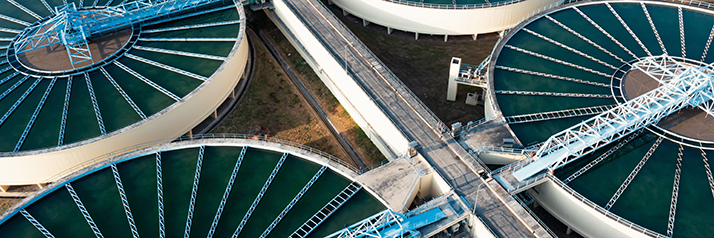
Greece’s water sector is entering a period of structural reform, driven by water scarcity, ageing networks, service fragmentation and substantial investment requirements. Although EYDAP and EYATH, Greece’s two largest water and wastewater utilities, are listed companies with private minority shareholders, the state retains decisive control. Full privatisation therefore remains constitutionally constrained by the Council of State’s treatment of water services as a public function requiring effective state oversight.
In July 2026, parliament approved legislation materially expanding the geographical and operational responsibilities of EYDAP and EYATH. The reform provides the transfer of water and wastewater services from specified municipal and local providers to the two utilities, together with related arrangements concerning assets, liabilities, personnel and outstanding obligations. It also addresses stormwater network management, strengthens the Regulatory Authority for Waste, Energy and Water and introduces measures concerning water scarcity and the Water Management Organisation of Thessaly.
The reform represents a shift from fragmented local provision towards larger operators with greater technical, financial and administrative capacity. The legislation preserves mechanisms through which relevant municipalities may retain ownership of certain fixed assets, whilst providing for judicial determination of the value of transferred assets and liabilities where required.
Investment opportunities arise principally from network replacement, leakage reduction, wastewater collection and treatment, smart metering, digital monitoring, water reuse, desalination, and climate-resilience projects. EYDAP is undertaking a substantial investment programme that includes drinking-water and wastewater infrastructure, digital systems and energy-efficiency measures. The extension of sewerage and treatment infrastructure in Eastern Attica remains particularly important, given Greece’s historic non-compliance with EU urban wastewater requirements.
Private-sector participation is therefore more likely to take the form of construction contracts, equipment supply, technology deployment and long-term operation and maintenance arrangements than the acquisition of control over the principal utilities. Existing operational contracts, including EYDAP’s arrangements for the Koropi – Paiania wastewater treatment facility, illustrate the potential for specialist international operators to participate without altering the public character of water-service provision.
Greece has moved decisively towards consolidation but the investment case will depend on whether the new institutional structure produces measurable improvements in network efficiency, service quality and project delivery.
"Greece's infrastructure market is entering a more mature phase, supported by its strategic location, access to European funding and an increasingly developed legal framework."
Conclusion
Greece’s infrastructure market is entering a more mature phase, supported by its strategic location, access to European funding and an increasingly developed legal framework. Opportunities extend across established asset classes, such as transport and social infrastructure, as well as emerging sectors like energy storage, data centres, carbon capture and critical raw materials.
The principal challenge is now execution. Grid capacity, permitting and procurement delays, institutional coordination and the availability of bankable contractual structures will determine whether announced projects progress to financing, construction and operation. Investors must therefore assess not only the strategic merits of each sector but also the allocation of regulatory, construction, demand and operational risk.
Greece is well placed to attract further infrastructure investment but geography and policy ambition alone does not guarantee project implementation. The market’s progress will ultimately depend on regulatory clarity, efficient project delivery and availability of bankable financing structures.
Athens Trainee Konstantinos Tsalavoutas also contributed to this article.
Click here to view the full article series.
Key contacts
Partner Athens
Senior Associate Athens
Counsel Athens
Senior Associate Athens
Associate Athens
Associate Athens
Associate Athens
Associate Athens
Associate Athens