Partner London
"On 26 June 2026, Ofgem published for consultation its ‘minded to’ decision for projects which are selected for the LDES cap and floor regime."
On 26 June 2026, Ofgem published for consultation its ‘minded to’ decision for projects which are selected for the LDES cap and floor regime.
Award overview
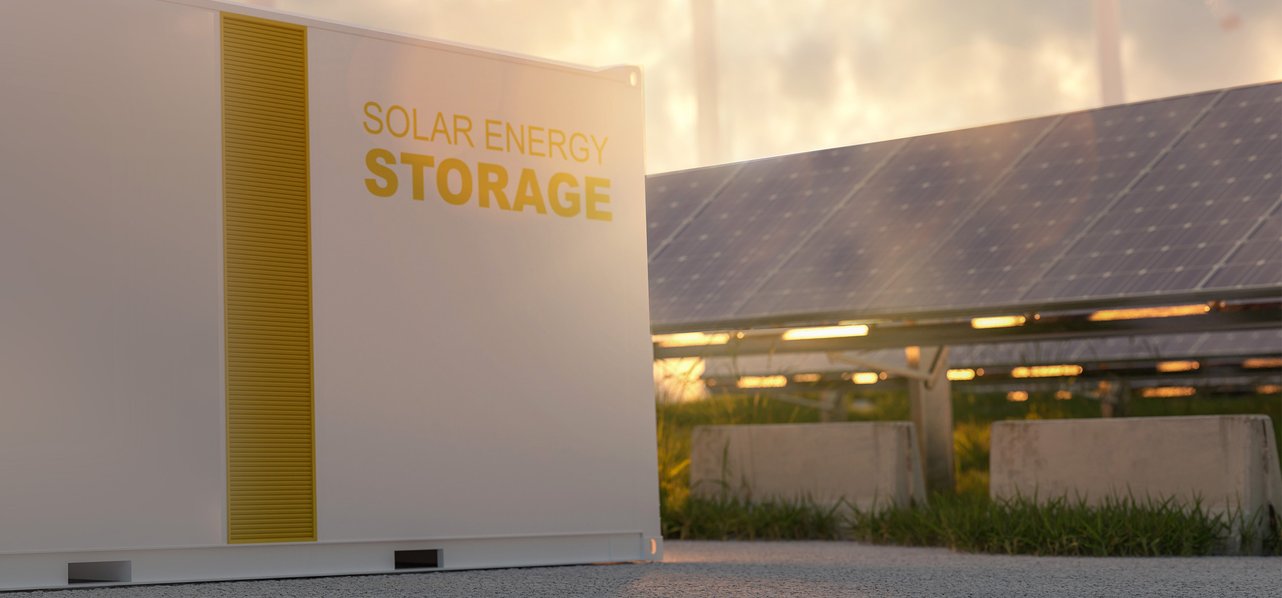
Out of 73 projects that reached this stage of the tender, 16 projects have been selected, amounting to just over 7.6 GW of storage capacity.
Just over 5 GW are based in Scotland, one in Wales and none in the South West of England. The majority of the projects are spread between lithium-ion battery energy storage system (“Li-ion BESS”) and pumped storage hydropower (“PSH”) technologies, alongside one compressed-air energy storage (“CAES”) and one vanadium redox flow (“VFB/Zn”) project.
The capacities range from 50 MW to 1800 MW. The storage duration ranging from 8 to 18 hours for the Li-ion BESS and VFB/Zn projects and 15 to 32 hours for the PSH and CAES projects.
Ofgem believes this mixture of technologies, spread across the UK supports their aspiration of flexibility and resilience across the system.
Ofgem also anticipates that there will be a certain amount of attrition, however, they have not inflated the capacity awarded to take this into account.
It is notable that on the PSH side of the awards, the projects with longer durations (i.e. 15 hours or more), and – in the case of Coire Glas and Earba PSH, a later date scheduled first operation of 2033 (per the track 2 process) – were more successful at this stage.
Assessment
The assessment of the project submissions was derived from a spread of different factors, namely economic, financial and strategic, drawing on outputs from the cost assessment and modelling analysis.
This was a challenging task for Ofgem. There were so many different variables, including the complexities of comparing different types and size of technologies and performance characteristics.
Ofgem’s decision was reached in accordance with their published decisions and methodology, including the MCA Framework, however, at their discretion they did introduce a number of amendments to the methodology where they deemed it necessary to address material deficiencies in assessment inputs and outputs.
A snapshot of some of these amendments include:
- as different projects made different assumptions as regards exchange rates, Ofgem applied the exchange rates as of the submission date – 18 November 2025 (notwithstanding changes that have occurred since then);
- Ofgem applied a standard benchmark for the Decommex value as different approaches were taken as regards Decommex cost estimations across projects in the Conventional Battery and Novel Battery technology groups;
- energy capacity was treated as a fixed project characteristic over the asset life and minimum and maximum state of charge assumptions were also standardised; and
- there was a change in position as regards the use of balancing mechanism outputs in the economic assessment.
The economic assessment combined a monetised assessment with non-monetised components. The components were comparatively assessed and then relative weights were assigned based on their perceived importance, with the benefit cost ratio having a 40% weighting and the other weighting ranging from 1 to 19%.
Ofgem applied standardised and technology-specific economic life assumptions based on project submissions and specialist advice (reflecting the point at which a project would be expected to require significant further capital investment to continue operating). Ofgem assumed that Li-ion BESS, VFB/ZN and CAES would all have a 25 year and PSH 40 year economic life.
45 projects requested a non-zero residual value, of which 41 were accepted and four rejected (on the basis that they linked residual value to negative decommissioning costs).
Key contacts


"Ofgem aim to issue final cap and floor awards in the Autumn of 2026. This is a delay from the original timeline, we are assuming that this is partly due to the judicial review and competition claims brought."
Timetable, oustandings and next steps
Ofgem aim to issue final cap and floor awards in the Autumn of 2026. This is a delay from the original timeline, we are assuming that this is partly due to the judicial review and competition claims brought.
The LDES special licence conditions underwent a call for input in the Spring of 2026, with a statutory consultation expected in Q2/Summer 2026. This is running later than originally anticipated and may make it difficult for bidders to finalise their assumptions and models without having definitive licence conditions.
There are a number of key aspects of the licence conditions which are still awaiting feedback from Ofgem. We have provided a brief snapshot of some of the challenges that the current licence conditions may raise, depending on the nature of the project:
- Ofgem have deviated from interconnector licence conditions/CfD terms in a number of key areas without any real reasoning for such deviations and have introduced non-market provisions (which always make us lawyers nervous!);
- a number of provisions, including the Minimum Availability Target, being more aligned to Li-ion BESS than other technologies;
- the licence conditions leave a lot of discretion and powers with Ofgem to determine and/or open up certain provisions – leaving it quite vague and thereby relying on Ofgem behaving reasonably and properly notwithstanding competing objectives;
- restrictions on distributions;
- non recognition for grid delays;
- extended time periods for making decisions; and
- interplay with the Facility Specific Parameters Register being unclear.
Project challenges and opportunities
The selected projects are not straightforward – they are pushing the boundaries, in terms of:
- storage duration going to eight hours and even eighteen hours for the Li-ion BESS technologies;
- the limited deployment of CAES and VFB/Zn; and
- whilst PSH is an established technology, there has been no new build for a number of decades and there are challenges in terms of permitting and geological uncertainties.
Alongside the lack of clarity at this stage on the licence conditions and the project challenges detailed above (including their high capacity and capex, especially in the context of PSH), these will not be easy projects to be project financed quickly. Having said that, cap and floor regimes are attractive to funders as the debt can be modelled in a classic manner against the floor. We are aware that a lot of funders are showing interest in the projects backed by the LDES regime for this reason. Project finance lenders are no stranger to long-lead construction periods and the pace of change in the BESS industry revenue stack has been unparalleled – LDES can be viewed as representing the next chapter or layer in the stack.
Ofgem intends to consult on the design of future cap and floor tenders, with the aim of opening the next tender in 2027. The design of the next tender will take into account the recommendations in the Strategic Spatial Energy Plan (“SSEP”), overall energy system reforms, the role of new/emerging technologies and lessons learnt.
Key contacts
Partner London
Partner London
Senior Associate London