Partner New York
"Non-US persons dealing with Cuba will experience significantly greater US sanctions risk as a result of the Executive Order."
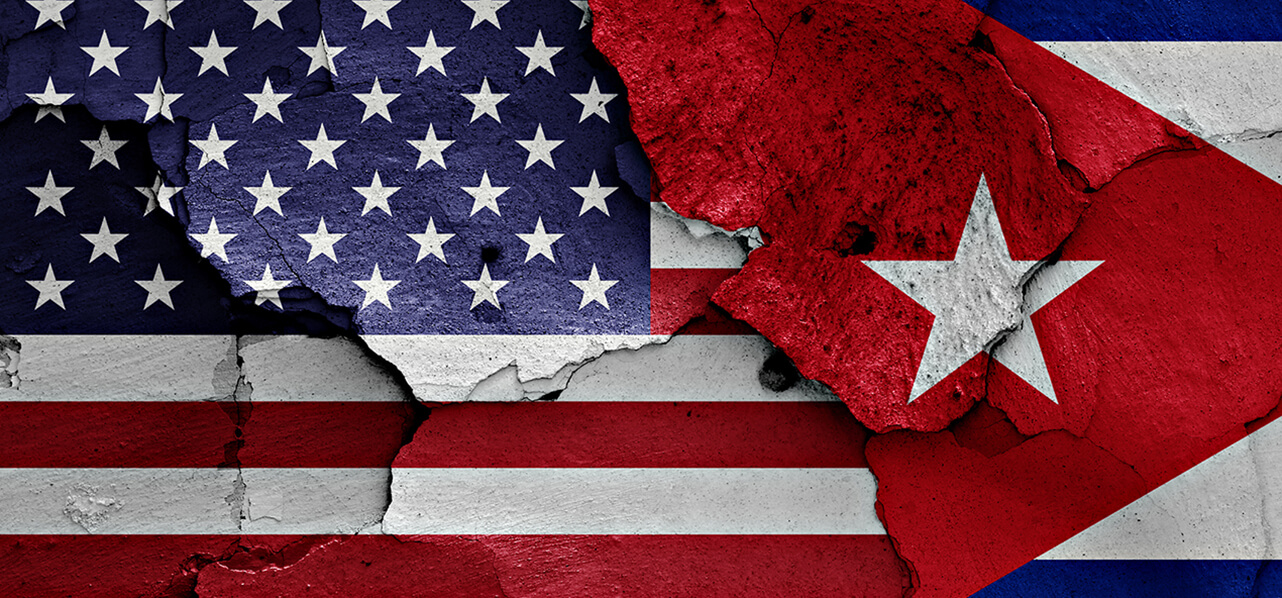
On May 1, 2026, President Trump issued Executive Order 14404 (the “Executive Order”) that established a ‘secondary sanctions’ program targeting Cuba. This brings Cuba in line with other US sanctions programs, most of which have a secondary sanctions component. Non-US persons dealing with Cuba will experience significantly greater US sanctions risk as a result of the Executive Order.
Background: primary vs. secondary sanctions
The US Office of Foreign Assets Control (“OFAC”) enforces both primary and secondary sanctions against multiple targets. In general, primary sanctions apply to ‘US persons’, which generally is defined as US citizens or permanent residents, entities organized in the US, and any other persons in the US. In the case of Cuba sanctions, non-US entities controlled by a US person are also treated as US persons. US sanctions generally provide that US persons cannot deal with Cuba, subject to several exceptions and licenses, but do not contain similar restrictions on non-US persons dealing with Cuba. In practice, even non-US persons may be required to comply with primary sanctions if there is any US nexus to the relevant transaction under broad rules prohibiting a US person from ‘facilitating’ a transaction with a sanctioned country or party. However, if there is no US nexus whatsoever, a non-US person that engages in a transaction with a sanctioned party or country generally will not be in violation of US primary sanctions. The penalty for a violation of primary sanctions is a US dollar fine.
"In contrast to primary sanctions, secondary sanctions generally apply to non-US persons even if there is no US nexus."
In contrast to primary sanctions, secondary sanctions generally apply to non-US persons even if there is no US nexus. Whilst the precise scope of secondary sanctions depends on the sanctions program in question, secondary sanctions generally apply to non-US persons that either engage in a targeted activity or targeted sector of a sanctioned country (such as the oil and gas sector), or engage in certain transactions with sanctioned parties. In most cases, a non-US person that does not engage in transactions with sanctioned parties or in sanctioned activities will not be in violation of secondary sanctions, even in a country that is the target of comprehensive US sanctions, such as Cuba or Iran.
If OFAC determines that a non-US person has violated secondary sanctions, the non-US person may be added to the Specially Designated Nationals and Blocked Persons (“SDN”) list. Vessels and aircraft can also be added to the SDN list. In some cases, being added to the SDN list can be worse than being found in violation of primary sanctions. Although financial penalties for a primary sanctions violation can be large, once the penalty is paid, the relevant party can continue with its business. In contrast, when an entity is added to the SDN list, it generally cannot trade with US parties or access world financial markets until it is removed from the list.
US primary sanctions on Cuba: in general
The US has maintained a comprehensive primary sanctions program targeting Cuba for over 60 years, via the Cuban Assets Control Regulations, (“CACR”). Under the CACR, US persons (including non-US entities controlled by a US person) generally are prohibited from engaging in transactions with Cuba, subject to multiple licensed exceptions. Whilst non-US persons could be at risk if there is a US nexus to their transactions with Cuba, the CACR generally does not prohibit non-US persons from dealing with Cuba. In addition, under the ‘U-Turn License’, non-US persons can engage in US dollar transactions with Cuba in certain circumstances. A special rule provides that vessels that deliver certain cargo to Cuba cannot call at a US port for 180 days after the call.
In addition to the CACR sanctions, the US Bureau of Industry and Security maintains a comprehensive embargo on Cuba that prohibits the export or reexport of most US origin items to Cuba. Furthermore, Title III of the Helms-Burton Act provides a private right of action that permits US nationals whose property was expropriated by the Cuban government following the 1959 revolution to bring a lawsuit in US courts against those who ‘traffic’ in such expropriated property, which has led to lawsuits against major cruise companies for “trafficking” in expropriated Cuban ports. Cuba is also on the US State Department’s list of state sponsors of terrorism. Finally, the Trump administration has used tariffs and other trade mechanisms to target Cuba.
"As a result of the Executive Order, non-US persons dealing with Cuba can now be at risk of US sanctions even if there is no direct or indirect US nexus to their transactions."
Executive Order 14404
As a result of the Executive Order, non-US persons dealing with Cuba can now be at risk of US sanctions even if there is no direct or indirect US nexus to their transactions. Under the Executive Order, any person determined to operate in the energy, defense, metals and mining, financial services, security, or future designated sectors of the Cuban economy is at risk of being added to the SDN list. Furthermore, a non-US person is at risk if such person is determined ‘to have materially assisted, sponsored, or provided financial, material, or technological support for, or goods or services to or in support of, the Government of Cuba’ or any person designated as an SDN under the Executive Order. For this purpose, the ‘Government of Cuba’ is defined to include any person owned, controlled, or acting for or on behalf of, the Government of Cuba, whether or not separately designated.
The Executive Order was issued under the International Emergency Economic Powers Act of 1977 (“IEEPA”), whereas the older Cuba sanctions program falls under the authority of the Trading With the Enemy Act of 1917 (“TWEA”). One practical difference between IEEPA and TWEA is the amount of penalties at stake. The highest civil penalty per transaction under IEEPA is generally the greater of twice the value of the underlying transaction and US$250,000 (inflation-adjusted, currently at US$377,700). In contrast, the highest civil penalty per transaction under TWEA is generally US$50,000 (inflation-adjusted, currently at US$111,308).
On May 7, 2026, OFAC designated Grupo De Administracion Empresarial S.A. (GAESA) and Moa Nickel as SDNs under the Executive Order. GAESA is owned and operated by the Cuban Revolutionary Armed Forces and is involved in a large portion of the Cuban economy. Moa Nickel is a significant Cuban mining company. In a FAQ, OFAC authorized transactions ordinarily incident and necessary to the wind down of transactions involving GAESA through June 5, 2026, subject to limitations.
"Therefore, any transaction involving the Government of Cuba or an SDN designated under the Executive Order may result in secondary sanctions risk. "
Implications for non-US persons
In practice, it can be difficult to determine what constitutes ‘material’ assistance or support. Therefore, any transaction involving the Government of Cuba or an SDN designated under the Executive Order may result in secondary sanctions risk. In a worst-case scenario, a non-US person determined to have provided goods or services to the Government of Cuba or such an SDN may itself be added to the SDN list. Similarly, there is no guidance regarding what constitutes ‘operating in’ the energy, defense, metals and mining, financial services or security sectors of the Cuban economy, so any transactions involving these sectors (however defined) may similarly result in secondary sanctions risk.
In theory, a Cuban transaction by a non-US person that does not involve a sanctioned party or any of the designated sectors of the Cuban economy should not result in a violation of secondary sanctions. However, given that the Government of Cuba and all entities that it owns and controls are sanctioned under the Executive Order, it may be difficult as a practical matter to avoid transactions with a sanctioned party.
On May 7, 2026, OFAC issued General License 1, which generally authorizes transactions that are ‘authorized or exempt’ under the CACR. Whilst the General License covers transactions that are already subject to a general or specific license under the CACR, there is no further guidance regarding the meaning of ‘authorized or exempt’.
Questions and Uncertainties
Q: What constitutes ‘material’ assistance?
A: As of now there is no guidance. Therefore, any transaction that involves the provision of cash, goods or services to the Government of Cuba or to an SDN designated under the Executive Order may risk violating sanctions.
Q: What constitutes ‘operating in’ the energy, defense, metals and mining, financial services or security sectors of the Cuban economy? Could a non-Cuban company that transports oil or petroleum products to Cuba be considered ‘operating in’ the energy sector? Could a non-Cuban company that transports metals from Cuba to a third country be considered ‘operating in’ the metals sector?
A: As of now, OFAC has released no guidance. OFAC has released guidance regarding what constitutes ‘operating in’ certain sectors pursuant to other sanctions programs, including the Russian sanctions program, which may be instructive (although guidance from another sanctions program is not binding with respect to the Cuba sanctions program). In the case of Russia, OFAC has confirmed that the maritime transportation of Russian oil and petroleum products in compliance with the Russian ‘price cap’ rules should not constitute operating in the ‘energy sector’ of the Russian economy, but there is no comparable price cap regime applicable to Cuba. It is unclear whether, in the case where there is no involvement by the Government of Cuba or an SDN, the transportation of Cuban metals to a third country would constitute ‘operating in’ the metals sector of the Cuban economy.
Q: Is there an exception from the secondary sanctions for payment to the Government of Cuba of taxes, port fees and other items necessary to deal with otherwise permissible transactions involving Cuba?
A: As of now, there is no explicit license addressing such payments. By contrast, for example, the Venezuelan sanctions program generally permits transactions with the Government of Venezuela that are ordinarily incident and necessary to operations or use of ports and airports in Venezuela. General License 1 permits transactions that are ‘authorized or exempt’ by the CACR, but it is unclear how this should be applied in the case of a non-US person dealing with Cuba. For example, a US person engaging in licensed trade of agricultural products from the US to Cuba presumably would obtain a license that covers payment of all necessary port fees. There is no comparable general license for a non-US person to confirm that it will not be in violation of secondary sanctions for making a similar payment.
Q: Is the Executive Order relevant for US persons?
A: To a large extent, no. US persons generally are prohibited from engaging in transactions involving Cuba, other than licensed transactions. General License 1 provides that the licenses and exceptions under the CACR that apply to US persons will continue to apply to the Executive Order. Perhaps the biggest change is the penalty amounts for a violation: fines for violations of IEEPA (applicable to the Executive Order) are significantly larger than fines for violations of the TWEA (applicable to the CACR).
Q: How will the Executive Order affect parties subject to the EU blocking statute relating to Cuba sanctions?
A: The blocking statute is designed to create tension between complying with US and EU law. Parties subject to the blocking law may face the difficulty of balancing relative US and EU legal risk.