Partner Rome
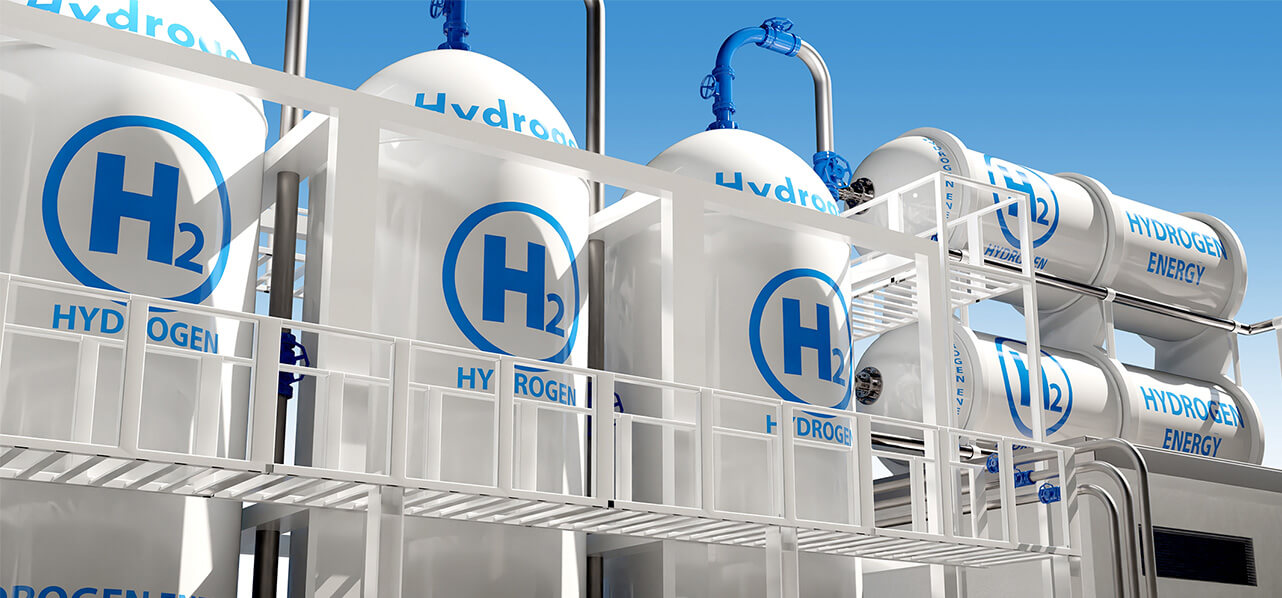
"The Decree now introduces the first comprehensive national support scheme dedicated to the production of renewable hydrogen."
The new incentive scheme is one of the key instruments for promoting the decarbonisation of industry and transport and fostering the development of the national hydrogen value chain.
More than two years after the first announcements, the Decree now introduces the first comprehensive national support scheme dedicated to the production of renewable hydrogen, complementing the capital grants already provided under the NRRP and IPCEI initiatives with a mechanism aimed at supporting the operational phase of hydrogen production plants.
The objective is to bridge the significant cost gap that currently separates renewable hydrogen from fossil-based alternatives, thereby creating the economic conditions necessary for the development of new projects and for the growth of demand in so-called hard-to-abate sectors.
The Decree applies to the production of renewable hydrogen, a category that includes both renewable hydrogen produced through electrolysis powered by renewable energy sources and biohydrogen produced from sustainable biomass. Consistent with the European regulatory framework, access to incentives is subject to compliance with stringent environmental requirements and to the demonstration of specific greenhouse gas emission reduction thresholds compared with the relevant fossil fuel benchmarks.
The measure provides for the allocation of incentives through competitive procedures organised by GSE.
"The Decree makes a total quota of 200,000 tonnes per year of incentivised hydrogen available production for the period 2026-2029."
Competitive procedures
The Decree makes a total quota of 200,000 tonnes per year of incentivised hydrogen available production for the period 2026-2029 and provides for the organisation of at least one competitive procedure every six months. The decision to rely on competitive mechanisms reflects the intention to ensure the efficient use of public resources while at the same time promoting a gradual reduction in the cost of renewable hydrogen.
The Operational Rules set out the timetable and procedures for participation in the competitive processes. Applications must be submitted within 60 days from the opening of the relevant call for tenders and be accompanied by the required technical, administrative and financial documentation, including authorisations or evidence that the relevant authorisation procedure has been initiated, application for grid connection, documentation proving the applicant’s financial soundness and RFNBO pre-certification.
For procedures following the first auction, GSE will also launch, at least six months prior to the opening of the auction, a process for collecting expressions of interest aimed at assessing the potential level of market participation and determining the production quotas to be auctioned. Bids must indicate the percentage discount offered compared to the upper strike price and be accompanied by the payment of administrative fees and the provisional guarantee.
As regards the economic structure of the support mechanism, the Decree introduces a system based on the recognition of a variable incentive expressed in euro per kilogram of hydrogen produced.
The incentive is determined by considering the difference between the price given to the producer and the reference price for renewable hydrogen, defined by market parameters. The mechanism aims to ensure revenue stabilisation, reducing operators’ exposure to market fluctuations and improving the bankability of investments.
For renewable hydrogen production plants based on:
- electrolysis up to 10 MW: strike price of 11 €/kg, upper reference value of 13 €/kg and lower threshold of 8 €/kg; and
- electrolysis above 10 MW: strike price of 9 €/kg, upper reference value of 11 €/kg and lower threshold of 7 €/kg.
For biohydrogen: strike price of 8 €/kg, upper reference value of 10 €/kg and lower threshold of 6 €/kg.
The differentiation of tariff levels reflects the different stages of technological maturity and the economies of scale achievable by larger projects. In particular, the Decree assumes that electrolytic plants exceeding 10 MW can achieve lower production costs than smaller facilities and therefore provides for lower support levels.
MASE has also devoted particular attention to the transport sector, considering it an area in which hydrogen could play a decisive role in the decarbonisation process. The Decree introduces a specific remuneration premium of €2/kg for hydrogen used in transport applications. The measure forms part of the broader European policy framework aimed at progressively increasing the deployment of renewable fuels in maritime, aviation and land transport.
Key contacts

Partner Milan

Associate Milan

Associate Rome
"Incentives will be granted for a period of fifteen years from the commercial operation date of the plant."
Project finance considerations
A further noteworthy aspect concerns the duration of the support scheme. Incentives will be granted for a period of fifteen years from the commercial operation date of the plant, a particularly significant timeframe considering the capital-intensive nature of investments in renewable hydrogen production. The provision of such a long support period responds to the need to ensure certainty of cash flows and facilitate access to project finance.
The Decree also introduces a mechanism comparable to a contract for difference (“CfD”). Where the difference between the strike price and the reference price is positive, GSE will pay the relevant incentive to the producer. Conversely, if market conditions result in a negative differential, the beneficiary must repay the corresponding amounts in accordance with the procedures established under the incentive scheme. This approach seeks to balance the need to support investments with the objective of avoiding overcompensation.
Financial guarantees and cumulation regime
MASE also places particular emphasis on the feasibility of projects. Selected projects must enter into operation within 36 months from the publication of the ranking lists and will be required to provide specific financial guarantees.
In this regard, the Decree identifies standard investment costs equal to:
- €2.2 million/MW for electrolytic plants up to 10 MW;
- €1.4 million/MW for larger electrolytic plants; and
- €4 million/MWth for biohydrogen plants based on biomass gasification, while providing for a final guarantee equal to 5% of such amounts.
Of particular interest to operators is the cumulation regime governed by Article 11 of the Decree. The measure is based on the general principle of non-cumulability, whereby the incentive may not be combined with other public incentives or support schemes of any kind, in compliance with the prohibition of double funding laid down by Regulation (EU) 2021/241 and the European State aid framework.
"The new incentive mechanism is expected to enhance the bankability of projects and foster effective deployment of hydrogen in the so-called hard-to-abate sectors."
The Decree nevertheless identifies certain specific exceptions to this principle, allowing cumulation with expressly identified measures. Of particular relevance is the aid scheme introduced by Ministerial Decree No. 463 of 21 October 2022, financed under the National Recovery and Resilience Plan (NRRP), which supports renewable hydrogen production in former industrial areas (the so-called Hydrogen Valleys). Cumulation is also permitted with the support mechanism for renewable-powered electrolysers under Ministerial Decree No. 347/2022, with aid granted under Hydrogen IPCEI projects, and with any additional support measures exclusively aimed at covering investment costs.
This approach is consistent with the overall structure of the Decree, which is primarily intended to support the operational phase of hydrogen production while at the same time allowing operators to benefit from certain public instruments designed to finance initial investments. To prevent overcompensation and ensure compliance with the European State aid framework, the legislator provides for an adjustment of the price recognised under the new incentive mechanism in accordance with the rules established in Annex A to the Decree.
Cross-border participation
It is also worth highlighting the decision to open the scheme, under specific conditions, to projects located outside Italy. The Decree allows facilities located in other EU Member States to participate in competitive procedures. The same applies – in certain cases – to third countries bordering the European Union and linked to it through free trade agreements, provided that the hydrogen is exported to and consumed in Italy and that specific reciprocity requirements are satisfied.
Where the main obstacle to the development of the hydrogen value chain is economic competitiveness compared to fossil-based alternatives, the new incentive mechanism is expected to enhance the bankability of projects and foster effective deployment of hydrogen in the so-called hard-to-abate sectors.
Key contacts
Partner Rome
Partner Milan
Associate Milan
Associate Rome