Partner London
"Despite disruption, the structural foundations of GCC infrastructure demand have not changed. Populations are growing. Diversification imperatives remain in place and, if anything, have been sharpened by the conflict in the Middle East."
Following our previous article, this second part of our spotlight on the GCC analyses the infrastructure sector in the region and takes a closer look at where the market currently stands and where it is headed.
SECTOR ANALYSIS: WHERE THE MARKET STANDS AND WHERE IT IS HEADING
Despite disruption, the structural foundations of GCC infrastructure demand have not changed. Populations are growing. Diversification imperatives remain in place and, if anything, have been sharpened by the conflict in the Middle East. Sovereign balance sheets retain significant capacity. The question is not whether this market will continue – it will – it is which asset classes will recover fastest, which offer the best risk-adjusted project finance proposition in the near- and medium-term and where does the structural change created by recent events produce new opportunities?
Transport infrastructure
Airports represent the sharpest near-term dislocation. Dubai International, the world’s busiest international hub in 2025, had its operations initially suspended and then curtailed as the impact of the conflict continues. Both the revenue and reputational damage are significant. Concession agreements dependent on passenger throughput guarantees are being tested and government support mechanisms – availability payments, minimum revenue guarantees and sovereign backstops – are being called upon.
The medium-term procurement pipeline, however, is among the most compelling in any global market:
- Dubai has announced the major expansion of Al Maktoum International Airport, likely requiring sophisticated project finance, PPP and ECA structuring;
- Saudi Arabia had shortlisted qualified bidders for the Abha International Airport development as a PPP concession prior to the conflict halting proceedings; and
- Saudi Arabia’s national carrier Riyadh Air represents a driver for airport capacity expansion at King Salman Airport.
The structural demand case for airport expansion remains compelling once regional stability returns. However, there is the potential for lenders to reprice aviation risk for years due to concerns of both regional instability and the rise in aviation fuel prices. New greenfield transactions will likely require pure availability-payment structures with strong sovereign credit behind them, rather than traffic-risk models.
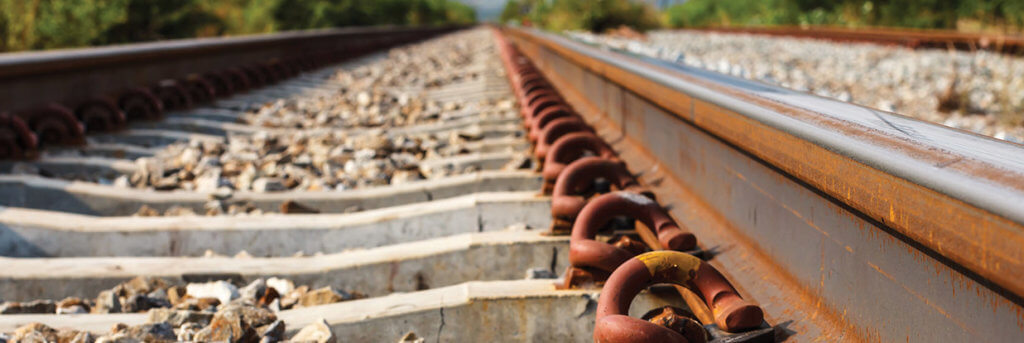
Rail is among the most resilient asset classes in current conditions, with government-owned or -backed structures dominating. The need for rail investment has been reinforced by the conflict, with east-west rail corridors connecting Gulf coast industrial zones to Red Sea ports acquiring specific economic security value beyond their original purpose – this includes the Riyadh-Doha high-speed rail corridor, the GCC Railway interconnector and Etihad Rail phase 2. Construction delays of six to 18 months are expected but the medium-term procurement pipeline will be large and should be prioritised.
Ports are experiencing the most severe operational disruption of any asset class. Gulf-facing ports dependent on Hormuz-linked inbound container traffic are at near-zero throughput. The strategic lesson of the crisis will surely drive material acceleration in Red Sea-side port capacity at Yanbu and Jeddah and particularly at Oman’s Port of Duqm on the Arabian Sea an asset which, sitting entirely outside the Strait of Hormuz, has become one of the region’s most strategically valuable infrastructure locations almost overnight. Volume-based concession structures will face greater lender scrutiny going forward, with availability-based terminal leases likely to be preferred.
Roads present the calmest picture although these are infrastructure assets that have not traditionally been project financed in the region. That said, Saudi Arabia’s NCP has begun tendering road PPPs under its project pipeline and the conflict has reinforced the strategic need for road corridors connecting industrial zones to Red Sea ports – a category of road where availability-payment PPP structures may yet find a market in the GCC.

Digital infrastructure: data centres, fibre and telecoms
"The GCC digital infrastructure market entered 2026 as arguably one of the most exciting investment stories in the world thanks to its data centres, subsea cables and AI infrastructure assets. However, the conflict has raised the question of physical security as a new bankability consideration that may reshape how these assets are designed, financed and insured."
The GCC digital infrastructure market entered 2026 as arguably one of the most exciting investment stories in the world thanks to its data centres, subsea cables and AI infrastructure assets. However, the conflict has raised the question of physical security as a new bankability consideration that may reshape how these assets are designed, financed and insured.
The region’s record of deploying large amounts of reliable, low-cost power, including round-the-clock renewables with battery storage and gas power with carbon capture, makes it an ideal location for hyperscale data centres. Flexible legal systems and centralised planning allow GCC governments to move fast and deploy capital in pursuit of strategic objectives in ways that would take years of permitting in North America or Europe.
The conflict has exposed data centres to direct physical risk, with strikes on infrastructure assets demonstrating vulnerabilities that the market had not previously priced for. New project finance structures for data centres may need to incorporate blast-hardened design specifications, distributed architecture requirements, backup connectivity and enhanced insurance arrangements as bankability conditions. However, once stability returns, the long-term demand drivers remain entirely intact, leaving data centres a key infrastructure asset going forward.
The Strait of Hormuz had emerged as a critical digital corridor prior to the conflict, but subsea cables have been severely impacted and repair ships cannot safely operate in an active conflict zone. The SEA-ME-WE 6 Gulf Extension, already delayed to mid-2027, faces further uncertainty. Expect accelerated investment in overland fibre routes across the Arabian Peninsula to Red Sea landing points, bypassing the Gulf entirely to be a new strategic priority.
Utilities: renewables, battery storage, water and waste
Renewable energy is the strongest structural theme in GCC infrastructure.
The UAE’s exit from OPEC appears, in part, to be a bet on its ability to produce cheap domestic renewable energy at scale. The more cheaply it can power itself other than from its hydrocarbons, the more of those hydrocarbons it can export. The Independent Power Producer (“IPP”) model — long-term PPAs with the likes of DEWA, EWEC, SWPC or SEC as offtakers, backed by sovereign credit — is the most proven and lender-comfortable project finance structure in the region. However, timelines to financial closes and practical completions on projects currently in procurement will likely need to factor in potentially significant delays as supply chains normalise. Overall the procurement pipeline is enormous and government mandated.
The region’s solar cost advantage – GCC installations consistently achieve 1,800-2,000 full-load operating hours annually compared with 950-1,400 in European and Asian markets – means tariff competitiveness will reassert itself once the crisis resolves.
Battery energy storage systems (“BESS”) represent the renewables sector’s most important adjacent opportunity. Increasingly, AI data centres and industrial offtakers require firm, dispatchable power rather than intermittent generation, which is driving demand for storage-integrated PPA structures that pair solar generation with grid-scale BESS. This creates a new bankability question: how does a lender underwrite a BESS-backed PPA where the storage technology degradation profile, cycling obligations and replacement cost risk are all embedded in the revenue model? The GCC market is working through this and the legal documentation precedents being established in current transactions will define the market for years. EWEC and Masdar have signed a strategic framework agreement to deploy more than 30 GW of solar and 8 GW of battery storage across Abu Dhabi. This is a programme that should set the template for how storage-integrated PPAs are structured regionally.
Water is non-negotiable for the GCC. Strikes on desalination facilities have highlighted that water infrastructure in the region is a strategic military target and must be financed accordingly. It is anticipated that new IWP project finance structures will need to address physical security, hardened infrastructure design and political risk insurance with greater specificity than before. Existing assets with long-term Water Purchase Agreements backed by sovereign offtakers are holding up on the strength of that government credit. The medium-term procurement pipeline is substantial and accelerating, with Saudi Arabia announcing over 40 new projects.
Sewage treatment and solid waste management, whilst less headline-generating, offer some of the most structurally attractive project finance risk profiles in the current environment. The appeal to the market lies in their structural characteristics: availability-payment PPP structures, non-discretionary demand, government offtakers and relatively limited exposure to Hormuz-dependent supply chains. Saudi Arabia, the UAE and Oman all have live or upcoming transactions in this space.
Event-driven infrastructure: sports, entertainment and Expo 2030
A category entirely distinct from conventional infrastructure PPP, which represents a significant and growing share of Saudi Arabian project procurement, is event-driven infrastructure. This includes the stadia, entertainment districts, theme parks and associated logistics and hospitality assets required for hosting the 2034 FIFA World Cup, Expo 2030 in Riyadh and the broader sports and entertainment economy that Vision 2030 is deliberately cultivating.
Saudi Arabia has issued tenders for the Prince Faisal bin Fahad Sports City Stadium and expressions of interest for additional venues in anticipation of the 2034 tournament. Qiddiya – the entertainment city being developed south-west of Riyadh – has already closed its US$700m UK Export Finance-backed Six Flags Theme Park facility. Unlike Saudi Arabia’s development of the Trojena ski resort which has been delayed and impacting its planned hosting of the 2029 Asian Winter Games, the 2034 World Cup is a fixed, non-deferrable sovereign commitment, meaning this procurement pipeline is not discretionary and will not be suspended by the conflict. Construction timelines are tight and the pressure on the development and delivery programme is intensified by current disruption.
The financing structures for event-driven assets are distinctive. Stadia and entertainment districts are increasingly structured as mixed-use precincts with retail, hospitality and residential components that generate revenue streams beyond event-day income. This revenue diversification makes the assets more financeable than a pure stadium concession, but it does require legal structures that accommodate multiple revenue streams, different tenancy and licensing arrangements, and a development timeline that must align with the event deadline regardless of market conditions. ECA support is likely to feature prominently in the financing mix.
Social infrastructure: healthcare, education and accommodation
Healthcare is one of the three asset classes most likely to see continued project finance market activity (alongside renewables and water) through the current uncertainty. Government attention to healthcare resilience due to the conflict will likely intensify procurement activity.
The Saudi Vision 2030 healthcare privatisation agenda was already producing a new generation of PPP hospital transactions before the conflict. Availability-payment structures with Ministry of Health or SEHA as offtakers provide revenue resilience independent of patient volumes – a structural feature that makes healthcare PPP one of the more fundable social infrastructure categories.
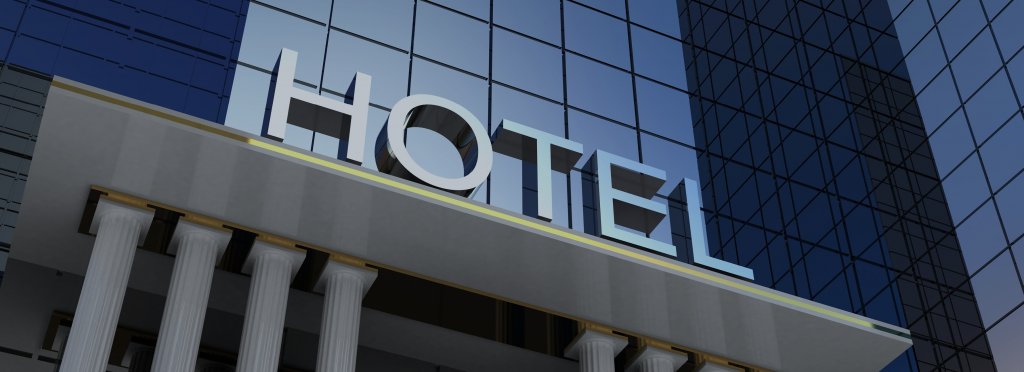
Hotels and hospitality tell a different story, representing the most severely disrupted social infrastructure asset class. The collapse of international travel to the GCC, suspension of major hub airports and direct physical damage to hospitality assets have produced conditions that make financing new greenfield hotel transactions unlikely. Saudi Arabia’s already rationalised giga-project hospitality pipeline remains a long-term ambition but the financial close timeline for new transactions is likely to be subject to significant delays.
Student accommodation potentially faces a slower recovery still, dependent on rebuilding perceptions of the GCC as a safe destination for international students.
EV charging: closer to bankability than the market assumes
Although not yet a mature project finance asset class, EV charging deserves a more nuanced assessment.
Abu Dhabi’s Integrated Transport Centre has entered into PPP contracts for the installation and operation of over 1,000 EV charging stations at 400 locations. This appears to represent a precedent that availability-payment PPP structures can work for this category when government is the anchor counterparty and the revenue risk is borne by the public sector rather than the developer.
The wider market remains early-stage, and the UAE’s OPEC exit and ADNOC’s strategy of maximising oil production will likely hold petrol prices lower in the near term, likely resulting in continued low consumer-level economic incentive for EV adoption. However, the Abu Dhabi model points towards a procurement approach that can be replicated across the GCC, in particular to the extent that electric fleet mandates for government and public transport vehicles create government-owned demand that does not depend on consumer behaviour.
Overall, it seems unlikely that the fledgling EV charging project finance market will flourish significantly in the short term.
Food security infrastructure: an emerging procurement category
"Food security has grown from a planning priority to an acute strategic imperative. The GCC imports up to 85% of its food, a dependency that makes these economies acutely vulnerable to supply chain disruption."
Food security has grown from a planning priority to an acute strategic imperative. The GCC imports up to 85% of its food, a dependency that makes these economies acutely vulnerable to supply chain disruption. Governments across the region were already acting on this before the conflict. The UAE’s AgTech Park in Abu Dhabi is a 200-hectare agricultural venture targeting production volumes of over 40 kilotons of fresh produce annually. The UAE is also actively acquiring farmland and agricultural operations across Africa and Asia to diversify supply chains – a sovereign investment strategy with direct implications for the logistics, cold-chain and port infrastructure needed to support those offshore food sources.
The project finance opportunities in this space are at an early stage of development, focussing on controlled environment agriculture, grain storage and strategic reserve facilities, cold chain logistics networks and the port-side infrastructure for handling diverse food import routes. The conflict will likely accelerate government procurement in all these areas. Contracting structures are most likely to follow the availability-payment PPP template where government is both the procuring authority and the strategic offtaker.
Looking ahead: the medium-term case
Once the Strait of Hormuz reopens, the GCC infrastructure market will face an enormous procurement challenge. Governments that have deferred project launches, contractors that have suspended mobilisation and sponsors that have paused financial close processes will all re-enter the market within a relatively compressed period. PwC’s April 2026 Global Infrastructure Outlook projects GCC infrastructure spending growing 75% between 2024 and 2050, from US$200bn to US$349bn annually, led by Saudi Arabia and the UAE.
The structural lessons of the crisis will shape the market that emerges. Physical resilience will be a bankability condition across asset classes from data centres to desalination plants. Supply chain diversification – including overland alternatives to Hormuz-dependent maritime routes – will be a priority. It is expected that Red Sea and Arabian Sea-facing infrastructure will attract a structural premium over Gulf-facing equivalents for years. The overland connectivity of the Arabian Peninsula is becoming a strategic economic security asset.
For practitioners advising on GCC infrastructure transactions moving forward, the discipline required is a blend of the familiar and new. Project finance tools — IWP and IPP structures, PPP concession frameworks, sukuk and project bond markets, ECA-backed facilities — are well-established and will continue to serve. What is new is the need to integrate geopolitical risk analysis into legal documentation at a level of specificity that was previously considered excessive. Force majeure clauses will need to name chokepoints. Insurance covenants will need to address war risk exclusions explicitly. Physical security will move from a technical schedule into the main body of project documents. Change in law provisions will need to contemplate the full range of conflict-related government interventions that the past few months have demonstrated are not theoretical.
This is a market that has been stress-tested at a level no one anticipated even six months ago. It is also a market with US$349bn of annual infrastructure spending on the horizon, sovereign wealth funds of extraordinary depth and economic diversification ambitions that remain, at the political level, non-negotiable. The premium on legal and structuring expertise that genuinely understands this environment has never been higher.
Click here to view the full article series.