< Back to insights hub

Article

Global infrastructure insights:
perspectives from WFW
Spotlight on the GCC – Part 1
25 June 2026

INTRODUCTION

Whilst there had been some signs of retraction, the Gulf Cooperation Council (“GCC”) infrastructure market began 2026 with genuine momentum and what looked to be a good pipeline of deals either in process or coming to market. This included multi-year development plans presented by several GCC governments: Saudi Arabia’s Vision 2030, Abu Dhabi’s Economic Vision 2030, Dubai’s 2040 Urban Master Plan and Qatar’s National Vision 2030. However – all within a matter of weeks – a regional conflict of historic proportions, the closure of the Strait of Hormuz and the UAE’s departure from OPEC have coincided to materially change the risk and feasibility assessment across every infrastructure asset class in the region.

"The closure of the Strait of Hormuz has introduced factors the GCC construction sector has not previously had to address at such a scale and risks redefining how construction risk is priced, managed and financed across the region."

THE MACRO CONTEXT: THREE SEISMIC EVENTS

The Hormuz Crisis

Three macro factors are playing a crucial role in reshaping the market.

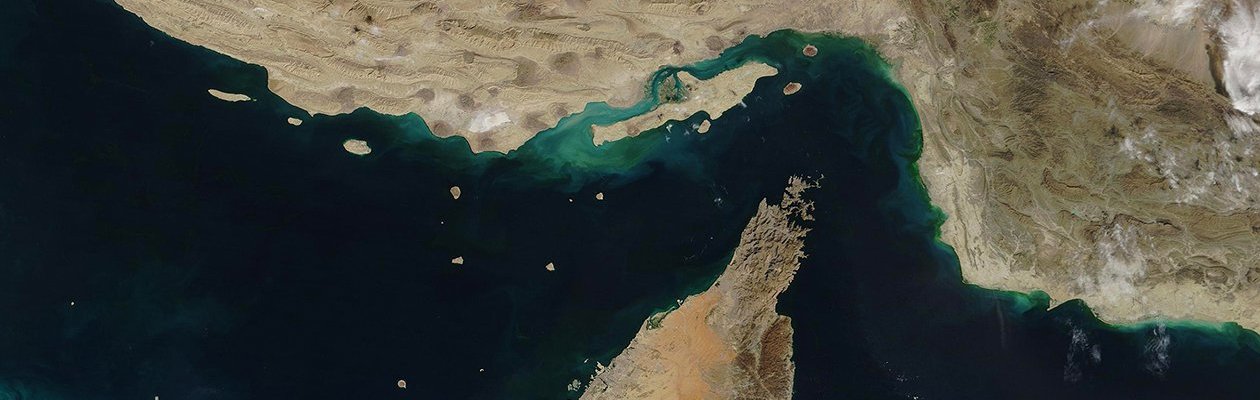
Iran’s response to escalating tensions in the Middle East to close the Strait of Hormuz, through which approximately 20 million barrels of oil products (approximately a quarter of global seaborne oil trade) and 20% of the world’s LNG had previously passed each day. By mid-March, Gulf oil exports fell dramatically, with Brent crude surging well above US$100 per barrel. Shipping traffic through the Strait collapsed to single digits daily. Iranian strikes hit civilian desalination facilities, energy infrastructure and, critically for the digital economy, data centre assets in the region.

The closure of the Strait of Hormuz has introduced factors the GCC construction sector has not previously had to address at such a scale and risks redefining how construction risk is priced, managed and financed across the region. Transit times for materials extended by up to two weeks as shipping lines rerouted around the Cape of Good Hope. The already high steel and concrete costs rose further. Contractors began documenting force majeure claims and invoking hardship provisions under applicable civil codes. Procurement teams pivoted to hybrid logistics using air freight into Saudi Arabia followed by bonded trucking into the UAE and Qatar, with material consequences for project budgets. Whilst there is hope that the June 2026 Islamabad Memorandum of Understanding between the United States and Iran may lead to a cessation of hostilities and a return to freedom of movement of vessels through the Strait, there remain many open questions over the long-term relationships between the GCC member states and Iran.

The UAE’s departure from OPEC

The UAE’s exit from OPEC (the Organization of Petroleum Exporting Countries) on 1 May 2026 was, in hindsight, a long time coming. For years Abu Dhabi pushed against production quotas that constrained its production capacity to significantly below the five million barrels per day it targeted by 2027 in its US$150bn capital plan for the period up to 2030. This was creating what is likely to be an annual opportunity cost in the tens of billions of dollars. The Middle East conflict sharpened the incentive to act. With peak oil demand on the horizon and the war increasing the rest of the world’s motivation to reduce dependence on GCC hydrocarbons, the case for monetising reserves as quickly as possible became overwhelming. ADNOC has since announced plans to award up to US$55bn in upstream and downstream projects before the end of 2028, as part of its broader US$150bn capital plan.

The short-term irony is that whilst the Strait of Hormuz remains effectively closed, the UAE cannot export its increased production in any meaningful way. However, the medium-term positioning is clear: a UAE that is maximising oil output will likely look to continue diversification of its domestic energy industry — meaning continued acceleration of renewable energy capacity — as well as upgraded upstream infrastructure, expanded export terminal capacity (in particular at non-Hormuz locations) and a digital infrastructure base capable of supporting a larger and more complex energy economy. In this way, the UAE’s OPEC exit is more than an oil story, it is also an infrastructure procurement story.

The deepening Saudi-UAE rivalry

The UAE-Saudi relationship, long managed as a strategic partnership despite growing competitive tension, appears to have deteriorated markedly. Saudi Arabia had already used regulatory pressure to seek to compel multinationals to relocate regional headquarters (typically from the UAE) to Riyadh. The UAE’s OPEC exit — which weakens an institution through which Riyadh exercises global influence and controls oil prices in ways that directly harm the Saudi fiscal position — has brought those tensions into the open.

The implications for pan-GCC infrastructure projects are real. Rail interconnectors, power grid integration, subsea cable systems and regional logistics networks all depend on bilateral cooperation that was, until recently, taken largely for granted. It is likely now time that sponsors and lenders on GCC cross-border transactions treat the Saudi-UAE political alignment as a variable in their risk assessment, not an assumption.

The legal landscape: force majeure, risk re-allocation and new contract disciplines

< Back to insights hub

"Force majeure is the defining legal theme of 2026 in the GCC. The analysis turns on two critical questions: when was the contract executed and what did it expressly provide?"

Force majeure is the defining legal theme of 2026 in the GCC. The analysis turns on two critical questions: when was the contract executed and what did it expressly provide? For contracts entered into before 28 February 2026, the onset of the war and the closure of the Strait will almost certainly satisfy unforeseeability requirements under both English law and the civil codes of UAE, Saudi Arabia and Qatar. For contracts signed after that date, counterparties may argue that disruption around the Strait was a known risk.

Beyond express force majeure, parties are actively invoking Article 249 of the UAE Civil Code – the hardship doctrine. This allows UAE courts to adjust contractual obligations where unforeseen extraordinary circumstances have made performance excessively burdensome, even where it remains technically possible. This is particularly relevant for lump sum EPC contractors, who find themselves facing supply chain cost increases and logistics delays that cannot be passed through under fixed-price arrangements but do not necessarily prevent performance altogether.

The insurance market has moved sharply. Maritime insurance premiums for the Gulf rose significantly within days of the conflict’s start, with major underwriters issuing war risk cancellation notices. Political risk insurance for infrastructure assets across the GCC is being repriced materially. Project finance lenders are assessing whether insurance covenant breaches in existing facilities trigger defaults or suspension events.

For parties entering into new contracts in this environment, careful drafting of force majeure, change in law, cost escalation and MAC provisions is now a commercial imperative relevant from day one of the deal, rather than to some future hypothetical.

Looking forward, risk allocation for GCC infrastructure will need to evolve. The market will likely increasingly require bespoke cost escalation mechanisms, more granular force majeure definitions that distinguish between specific disruptions, more explicit risk-sharing provisions between employers and contractors on the occurrence of geopolitical events and even potentially enhanced physical security requirements as a condition of practical completion, depending on the type and location of the infrastructure asset. Government procurement bodies wishing to continue attracting international EPC contractors and international project finance will need to consider how to reflect this in their standard forms.

Financing post conflict: PPP, ECAS and project bonds

PPP evolution in the GCC

The GCC has a long PPP story, beginning with pathfinder power and water projects in the 1990s, which demonstrated the feasibility of limited-recourse financing in the region and laid foundations on which every subsequent transaction has built. This accelerated in the 2010s when GCC governments began actively developing statutory PPP frameworks and by 2022, all six GCC member states had established some form of framework. Prior to the conflict there was a substantive extension of the use of PPP structures in social infrastructure – schools, hospitals, student accommodation, roads – and into new categories including sports venues, entertainment districts and EV charging networks.

The scale of private sector opportunity is substantial. Prior to the conflict it was estimated that the GCC represented a US$2.5tn infrastructure opportunity through private sector participation, with Saudi Arabia accounting for the majority. Both 2023 and 2024 saw Saudi Arabia make awards of PPPs totalling around US$20bn each year, a significant increase on the value of equivalent awards in previous years. Saudi Arabia’s National Centre for Privatisation’s (“NCP”) pre-conflict stated pipeline of over 175 projects spans transport, utilities, social infrastructure and digital assets. The UAE has demonstrated what is possible in the region regarding social infrastructure. Abu Dhabi reached financial close on the Zayed City Schools PPP, the Abu Dhabi Road Lighting PPP and the Khalifa University Student Accommodation PPP in 2022, 2023 and 2024 respectively. This success is reflected in increased perceived commoditisation of the market (in particular in the infrastructure-adjacent I(W)PP and related sectors) and the related tightening of margins. This has led to some international sponsors retracting from the market. This has created a gap filled by a growing crop of regionally based developers. This existing trend, allied with the impact of the conflict on project risk assessment, suggests that some international developers with a track record in the region may become increasingly selective on which infrastructure projects they are prepared to be involved in.

The PPP frameworks the GCC has developed over the past three decades are well-designed. However, the key unknown now is to what extent the conflict has changed the terms on which private capital will engage, in terms of both developers and their financiers. What changes – if any – will need to be made to the currently established risk allocation and pricing if they are to continue attracting the depth and quality of international capital that the region needs?

Export Credit Agencies: a critical and growing financing pillar

ECA financing is a distinct and increasingly significant pillar of GCC infrastructure finance, one whose importance has been amplified by the conflict. Where commercial bank appetite has tightened and political risk insurance has become more expensive or unavailable, ECA structures offer sovereign-to-sovereign credit support and tied or untied financing packages that can partially substitute for the government guarantees that the market may increasingly look for. ECAs (particularly those from Japan and Korea) have long been active as both lenders and providers of cover for commercial lenders as part of traditional project finance financing structures in the region. However, the market has seen an increased trend of ECA-backed corporate loans, albeit often with infrastructure asset-specific purpose clauses.

Recent notable ECA-backed deals in the region include:

  • a JBIC-backed US$990m facility for Ras Abu Fontas Power Company in January 2026;
  • a US$152m JBIC-backed facility supporting the 700 MW Yanbu onshore wind project;
  • a UK Export Finance backed Qiddiya Investment Company’s US$700m facility for the Six Flags Theme Park in Riyadh; and
  • SACE backing both Borouge’s US$3.2bn Ruwais petrochemicals facility and NEOM’s US$3bn facility.

These deals illustrate the range of asset classes that ECA finance is deployed for and the breadth of ECA home countries engaged in the region.

For developers and procurers of GCC infrastructure in the current environment, ECA structures offer several distinct advantages: mitigation of political risk through home-country government backing, access to longer tenors than the commercial bank market typically provides, and – in the case of tied facilities – a procurement discipline that can accelerate equipment sourcing from established international suppliers even when local logistics are disrupted.

"The PPP frameworks the GCC has developed over the past three decades are well-designed. However, the key unknown now is to what extent the conflict has changed the terms on which private capital will engage, in terms of both developers and their financiers."

Project bonds, Sukuk and Infrastructure Fund Capital

The capital market dimension of GCC infrastructure finance is at an inflection point. Project bonds are beginning to demonstrate real traction as sponsors look to recycle capital from operational assets, mini-perms from the 2020-2023 vintage approach their refinancing windows and PPA terms come up for renewal. At the same time, global infrastructure funds – drawn by the combination of sovereign-backed offtake, long concession terms and GCC governments actively seeking to recycle capital from operational assets – have arrived in the market in force. These funds bring a different approach to underwriting, with longer hold periods, market expectations on risk evaluation and often stronger environmental and governance requirements than the traditional regional banking market.

GCC outbound investment: a continuing trend

For most of its history, the GCC infrastructure market was a destination for inbound investment. A place where international capital, contractors and developers arrived to build, finance and operate assets on behalf of governments and their wholly owned enterprises. However, over the past decade, GCC-domiciled entities have become some of the world’s most significant exporters of infrastructure capital, developer expertise and project finance capacity. Understanding this shift is essential, because GCC outbound sponsors are now counterparties, competitors and co-investors in markets far beyond their home region.

Two entities exemplifying this transformation are Abu Dhabi-based clean energy developer Masdar and Saudi-listed developer ACWA Power. Masdar ended 2025 with a renewable energy portfolio of 65 GW across more than 40 countries, up from 20 GW in 2022. To hit its ambitious 100 GW target by 2030, Masdar has committed to deploying an additional US$30-35bn over five years. ACWA Power reached a total global portfolio of around 93 GW capacity and 9.2 million cubic metres per day of desalinated water by the end of 2025, achieving financial close on 15 projects worth US$18.7bn in a single year across Saudi Arabia, Egypt, Indonesia and Uzbekistan.

The strategic logic behind this trend is the diversification of sovereign income streams away from hydrocarbon dependence. The conflict is unlikely to reverse this trend. If anything, it has sharpened the incentive, with assets located in the Gulf experiencing operational disruption and lenders repricing GCC country risk. For GCC sovereigns and their infrastructure vehicles, international diversification has moved from a growth aspiration to an important risk management tool.

Cross-border M&A of European and North American infrastructure platforms by GCC buyers is likely to continue at pace. Transactions that require expertise in GCC regulatory and governance frameworks as well as the target jurisdiction’s infrastructure concession and regulatory environment. The structuring of co-investment arrangements between GCC sovereign-backed developers and international institutional investors (pension funds, infrastructure funds and insurance capital seeking exposure to long-duration infrastructure cashflows) is an increasingly active area. Similarly, it is anticipated that GCC developers will continue to seek opportunities in green fieldenergy infrastructure projects in Central Asia and Southeast Asia.

The upcoming second part of this spotlight on the GCC offers a sector analysis, looking at where the market currently stands and the direction it is heading in.

Click here to view the full article series.

< Back to insights hub