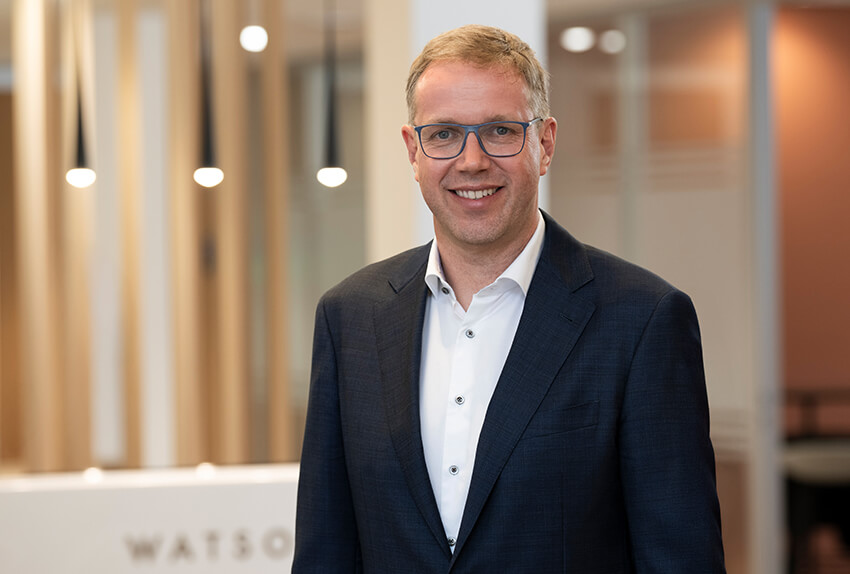
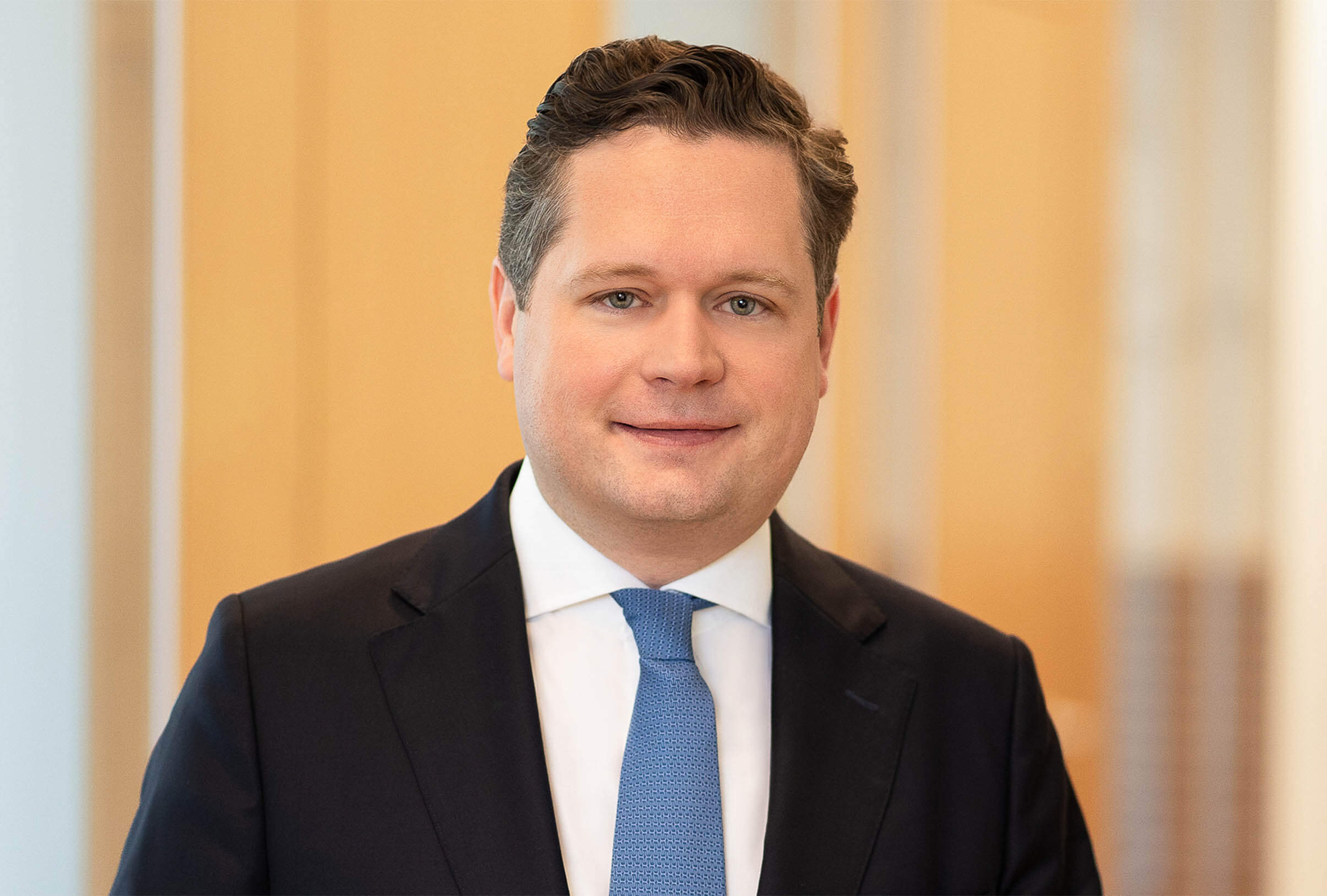
We were delighted to welcome clients, investors, developers, financiers and data centre industry stakeholders to our GDA Con Warm-Up Breakfast in Frankfurt, held in collaboration with ABN AMRO Bank N.V. ahead of GDA Con 2026.
The event provided an opportunity to discuss the key trends shaping the European data centre market. Moderated by WFW Partner Jörn Fingerhuth, the panel explored investment strategies, financing, energy infrastructure, sustainability requirements and the outlook for developers, investors and operators. The discussion highlighted the sector’s continued growth potential while underlining the importance of secure power, regulatory certainty, access to capital, and effective collaboration between private and public stakeholders.
Opening the breakfast, Christian R. Schindler welcomed guests and highlighted the importance of bringing together investors, developers, financiers, operators and public sector stakeholders at a time when digital infrastructure is becoming increasingly central to Europe’s economic competitiveness. He noted that data centres have evolved beyond a niche asset class to become a critical enabler of digitalisation, artificial intelligence and energy transition strategies. Christian emphasised that the sector’s continued success will depend on close cooperation across the entire ecosystem, including developers, investors, lenders, municipalities, regulators and energy providers, making forums such as the GDA Con Warm-Up Breakfast an important platform for exchanging perspectives and fostering collaboration.
Market Trends and Investment Outlook
The European data centre market continues to attract significant institutional capital, supported by accelerating demand for cloud services, artificial intelligence and digital infrastructure. Whilst investor appetite remains strong, market participants are becoming increasingly selective, focussing on projects where land, power, permits, delivery capability and customer demand are aligned.
Brinker noted that data centres have evolved from a specialist real estate segment into power-led critical infrastructure. Investors are therefore no longer assessing projects purely on location and connectivity. They are placing greater emphasis on energy availability, scalability, delivery capability and the ability to accommodate AI-related workloads.
However, the volume of projects under consideration should not be confused with deliverable capacity. Furthermore, market participants increasingly face structural constraints in obtaining timely grid connections as competing electricity demand from industry, electrification and storage projects continue to grow across Europe. Greater transparency and certainty regarding grid capacity and connection timelines would be among the most effective ways to accelerate sustainable data centre investment in Germany.
“Data centres have evolved from a specialist real estate segment into power-led critical infrastructure. Whilst investor appetite remains strong, capital is becoming increasingly selective: a site becomes truly investable only when land, power, permits, delivery capability and customer demand come together. In the current market, pipeline is not the same as supply, and a feasibility study is not the same as secured power. Greater transparency and certainty around grid capacity and connection timelines would therefore be one of the most effective ways to accelerate sustainable data-centre investment in Germany.” (Patrick Brinker, Head of Real Estate Investment Management, ABN AMRO Bank N.V.)
Key takeaways:
- investor appetite for high-quality data centre assets remains strong, but capital is becoming increasingly selective;
- AI-driven demand is accelerating capacity requirements across Europe;
- projects become genuinely investable when land, power, permits, delivery capability and customer demand come together;
- secure power and greater certainty around grid connection timelines are critical differentiators; and
- strategic partnerships are becoming increasingly important as projects grow in scale and complexity.
Power, Energy Infrastructure and Sustainability
Energy infrastructure remains one of the defining challenges for the sector. Chicu highlighted that power availability has shifted from being a technical consideration to becoming the primary determinant of project viability in many European markets. With demand growing faster than grid expansion, developers need to engage with utilities and infrastructure providers from the earliest stages of a project.
The discussion also explored the growing importance of sustainability. Investors, customers and regulators are placing greater emphasis on energy efficiency, renewable energy sourcing and long-term decarbonisation strategies. Addressing these requirements will depend on coordinated action across the public and private sectors.
“The future of data center development in Germany depends on more than just capital. It requires collaboration between developers, utilities, regulators, municipalities, and communities to deliver sustainable growth.” (Tatiana Chicu, Co-Founder & SVP Energy & Utilities, KRIOS Infrastructure Ltd.)
Key takeaways:
- power availability is often the primary constraint for new developments;
- early engagement with utilities and infrastructure providers is essential;
- energy efficiency, renewable energy sourcing and decarbonisation strategies are increasingly shaping investment decisions;
- long-term energy strategies can create a competitive advantage; and
- sustainable growth requires collaboration between developers, utilities, regulators, municipalities and local communities.
Regulatory and Planning Considerations
As the strategic importance of digital infrastructure continues to increase, regulatory frameworks are evolving alongside the market. The discussion focussed on the need to provide investors and developers with greater planning certainty while balancing local stakeholder interests and public policy objectives.
The panel emphasised that regulatory considerations should not be treated as a late-stage workstream. Permitting, administrative law matters, employment considerations and infrastructure planning are becoming increasingly interconnected, requiring a coordinated approach from project inception.
As grid capacity and power availability become key determinants of project viability, obtaining grid connections, coordinating with network operators and securing long-term energy supply are increasingly critical components of project development.
“For many years, the key question in data centre development was where capital could be deployed. Today, the more important question is where power, infrastructure and regulatory certainty can be secured. The projects that successfully align those elements will be the projects that attract investment, achieve financing and ultimately create the greatest value.” (WFW Counsel Rebecca Trampe-Berger)
The panel also discussed the relationship between project developers and municipalities. Early and transparent engagement can help align commercial objectives with local priorities, build trust and create lasting value for the communities in which projects are developed. In an environment where local acceptance is becoming increasingly important, municipalities are playing a central role in facilitating sustainable digital infrastructure development.
As data centres continue to be recognised as strategically important infrastructure, investors and developers increasingly seek regulatory certainty, predictable permitting processes and constructive cooperation between public authorities, municipalities and market participants from an early stage of project development to support long-term investment decisions.
“A trusting and reliable partnership between businesses and municipalities ensures the fair distribution of value creation among the various stakeholders.” (Dr. Stanislaw Chernin, Attorney-at-Law (IT, Administrative & Employment Law), Städte- und Gemeindebund NRW)
Key takeaways:
- regulatory and planning certainty remain key factors for investors;
- permitting processes and stakeholder engagement should begin early;
- administrative, employment and infrastructure matters are increasingly interconnected;
- trusting partnerships between businesses and municipalities support the fair distribution of value creation; and
- effective legal and regulatory planning can significantly influence project timelines and overall project success.
Looking Ahead
The panel agreed that demand for digital infrastructure shows no sign of slowing. However, successful projects will increasingly depend on the ability of developers, investors, operators, lenders, utilities, municipalities and other public stakeholders to work together effectively.
The convergence of artificial intelligence, growing capacity requirements and evolving sustainability expectations is expected to drive the next phase of investment across Europe. Organisations that can secure power, obtain the necessary permits, navigate regulatory complexities and deliver credible sustainability strategies will be best positioned to capitalise on the sector’s long-term opportunities.